


School of Graduate Studies honors two distinguished alums
For Dr. Katie Hall, the questions came from worried parents sitting beside their hospitalized children. Why had their child been born with a heart defect? What caused it? Could it have been prevented?
For Dr. Lee Bidwell, a different question emerged during his undergraduate years: Could a young man from a small Mississippi Delta community, who had never seriously considered becoming a scientist, build a career in research?
Those questions helped two alums, both employed at the University of Mississippi Medical Center, earn honors for their professional achievements.
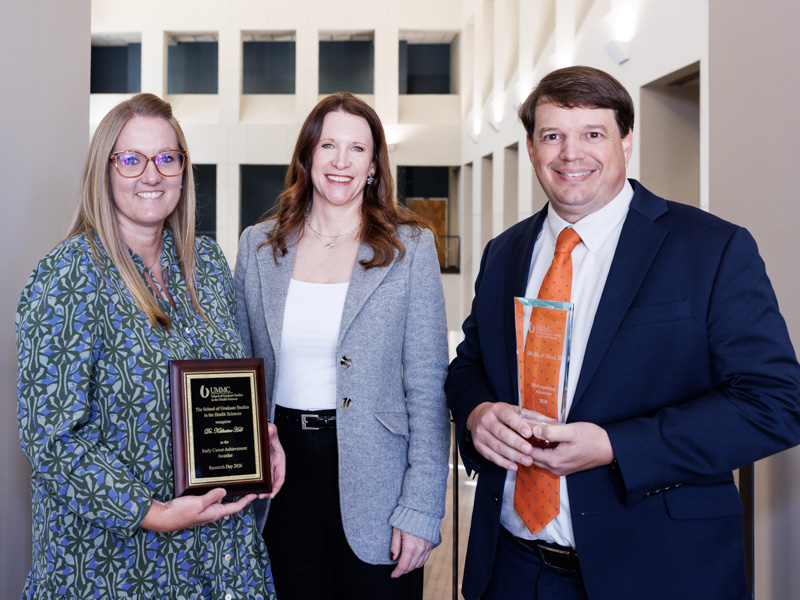
Bidwell, associate vice chancellor for research, received the Distinguished Alumnus Award, while Hall, a professor in the School of Nursing, received the Early Career Achievement Award during the 2026 Research Day for the School of Graduate Studies in the Health Sciences.
Their recognition Friday, Nov. 6, at the UMMC Norman C. Nelson Student Union celebrated careers distinguished by scientific investigation, mentorships and a commitment to improving health in Mississippi and beyond.
Although their professional journeys began differently, both credited their formative experiences and, a willingness to embrace new opportunities with helping them become accomplished researchers and educators.
For Dr. Sydney Murphy, dean of the School of Graduate Studies in the Health Sciences, recognizing two alumni who earned their doctorates at UMMC and continued building their careers in Mississippi was particularly meaningful.
Their achievements, she said, illustrate the opportunities available to graduates who want to pursue meaningful research while serving their home state.
Growing up in a small Mississippi Delta community, Bidwell had a relatively narrow understanding of what professional success might look like.
Medicine and law were familiar possibilities. Scientific research was not.
That began to change when he entered the University of Mississippi, where he encountered classmates whose academic abilities initially left him questioning his own.
Coming from a graduating class of roughly 40 students, Bidwell recalled being accustomed to standing out academically. College introduced him to students whose knowledge and abilities seemed far beyond his own.
The experience challenged his confidence but also taught him a lesson that would influence his career. He learned that success did not require being the smartest person in the room but rather persistence and hard work.
More importantly, an undergraduate research experience introduced him to a profession he had barely considered.
Working in the laboratory of a faculty mentor, Bidwell discovered an enthusiasm for scientific investigation.
Rather than treating him as an inexperienced undergraduate, his mentor involved him in discussions about experimental findings, data interpretation and scientific writing.
The experience changed Bidwell's understanding of what he could accomplish. Instead of pursuing medical school, he decided to pursue graduate education and a career in research.
After earning his undergraduate degree in 2002, Bidwell enrolled at UMMC, where he completed his doctorate in biochemistry in 2007.
His graduate mentor involved him in grant writing and research development at a level he said many graduate students do not encounter until later in their training.
Those opportunities helped prepare him for the challenges of establishing an independent research career.
Following postdoctoral training in cancer therapeutics and tumor-targeted drug delivery, Bidwell entered a difficult academic job market. Research positions were scarce, and his early applications produced little response.
But an opportunity at UMMC eventually opened the door to a faculty appointment in the Department of Neurology in 2011.
His research career subsequently expanded from cancer-related therapeutics into targeted drug delivery approaches with potential applications across several medical conditions.
Among his current investigations are systems designed to limit fetal exposure to potentially harmful medications while allowing pregnant patients to receive needed treatment. His laboratory also studies ways to deliver neuroprotective and anti-inflammatory therapies directly to injured brain tissue.
The work reflects an effort to overcome a central challenge in medicine: delivering treatments where they are needed while reducing unwanted effects elsewhere in the body.
Bidwell has authored 65 scientific manuscripts, holds 11 issued patents and has maintained National Institutes of Health research funding since 2014.
His professional responsibilities expanded further in 2023 when he was appointed associate vice chancellor for research.
Looking back, Bidwell credited the mentors who helped him develop as a scientist, particularly those who recognized potential he had not yet fully recognized in himself.
His career also taught him that setbacks are unavoidable, whether they involve rejected manuscripts, unsuccessful grant applications or the uncertainty of pursuing new scientific ideas.
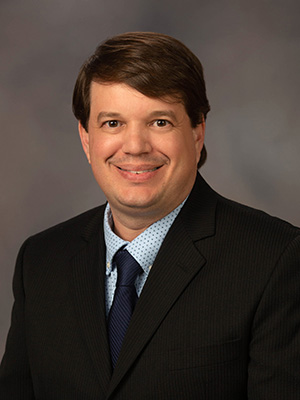
“One of the hardest things you have to learn in research is how to deal with rejection. Your paper doesn't get accepted. Your grant doesn't get funded. You can't take those decisions personally because rejection is part of the job,” Bidwell said.
He also emphasized the importance of professional relationships, a quality he believes has helped him build a successful research career at UMMC.
“It's about how you work with people. The colleagues I value most are the ones who collaborate, share ideas and work toward common goals.”
Hall's path into scientific research began not in a laboratory but at the bedsides of critically ill children.
As a nurse in pediatric critical care at Children’s of Mississippi, she cared for young patients with congenital heart defects and witnessed the uncertainty confronting their families.
Parents wanted to understand why their children had developed particular conditions. Sometimes, even the medical teams caring for them did not have definitive answers.
Those questions followed Hall into interdisciplinary conferences, where physicians and other specialists discussed unusual combinations of heart defects and conditions they encountered among Mississippi patients.
The conversations stirred her curiosity.
Rather than simply accepting that some questions remained unanswered, Hall wanted to investigate the factors contributing to those conditions and other health challenges affecting Mississippi families.
That desire helped motivate her pursuit of doctoral education and eventually a career combining nursing, research and teaching.
A Mississippi native, Hall earned her bachelor's degree in nursing from Mississippi College in 2008, followed by a master's degree in nursing education from UMMC in 2011 and a doctorate in nursing in 2019.
She joined the UMMC School of Nursing faculty in 2015 and progressed through academic appointments before becoming a professor in 2026.
Her research has expanded beyond the pediatric conditions that first inspired her interest in scientific investigation.
Today, Hall studies maternal and infant health, environmental and social influences on health, cancer screening follow-up, cardiometabolic conditions and disparities affecting women and communities across Mississippi and the Deep South.
Her work explores how factors such as neighborhood conditions, access to health care and individual behaviors can influence health outcomes.
Through interdisciplinary collaborations, she has also investigated barriers that may prevent women from receiving appropriate follow-up care after cervical cancer screening.
Increasingly, her research interests include understanding how social and environmental conditions may produce biological responses that influence women's health.
Hall described her professional development as a series of transitions, each bringing new responsibilities and opportunities for growth.
She illustrated that idea through a familiar experience with her daughters.

“My daughters and I love watching the leaves change colors in the fall. Thinking about those changes made me reflect on transitions in my own career. I didn't simply earn my doctorate and suddenly become the researcher I am today. It happened through a series of transitions and experiences.”
Those transitions have taken her from bedside nurse to investigator, from independent researcher to collaborator and, increasingly, from researcher to mentor.
Guiding doctoral students through research questions, dissertations and their first scientific publications has become another meaningful part of her career.
Hall credited colleagues, mentors, collaborators, students and family members with helping her reach those milestones.
Her growing responsibilities also taught her that professional ambition requires boundaries.
After completing her doctorate, she eagerly accepted invitations to participate in research projects and collaborations, sometimes taking on more than she could reasonably manage.
“Eventually, I ran myself ragged trying to do it all.”
The experience reinforced the importance of balancing professional opportunities with personal responsibilities, including time with her family.
Although Bidwell and Hall followed different professional paths, their experiences revealed common influences.
Both described mentors who helped them recognize opportunities, collaborators who broadened their perspectives and professional challenges that ultimately strengthened their careers.
"Twenty years from now, you're probably not going to remember everything that happened at work. But you will remember the important moments you missed with your children or family,” Bidwell said.
Their reflections underscored a broader theme of the recognition ceremony: Scientific careers are shaped not only by discoveries, grants and publications but also by the people who encourage, challenge and support researchers along the way.
The alumni awards were presented as part of the annual Research Day, which also featured oral and poster presentations by graduate students and postdoctoral fellows.
The event gave emerging investigators opportunities to share findings, respond to questions and learn about research across biomedical and health science disciplines.
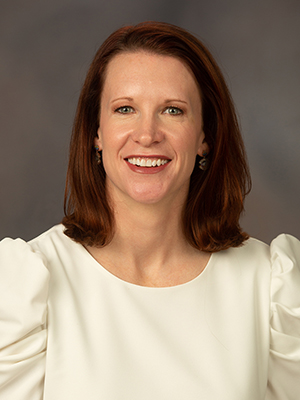
“What makes Research Day so exciting is that our students are trying to answer questions for which we don’t know the answer. So, it’s fun, about discovery and curiosity,” Murphy said.
She praised the students' accomplishments and acknowledged the faculty mentors and others who support their research development.