


80 by 2030 Colorectal Cancer Screening Initiative targets cancer detection, prevention
Too many Mississippians are dying from late-stage colorectal cancer because too few are getting screened for the disease.
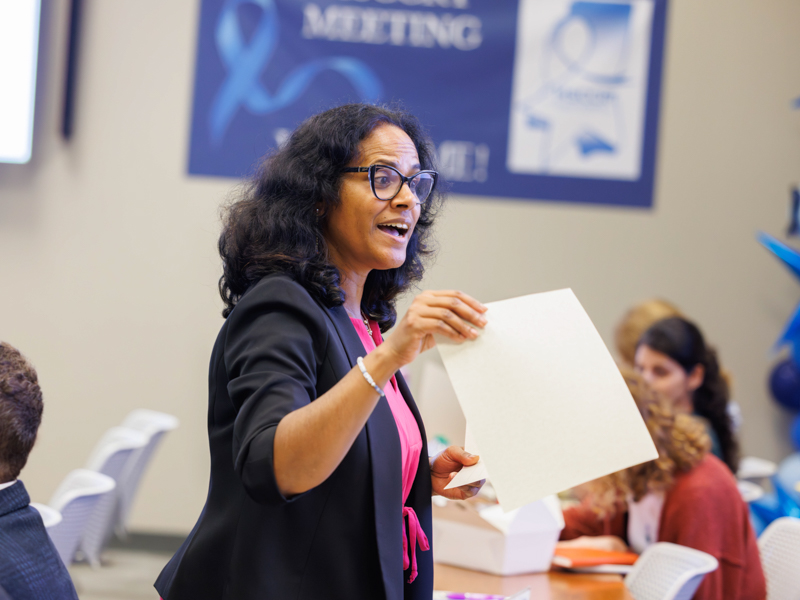
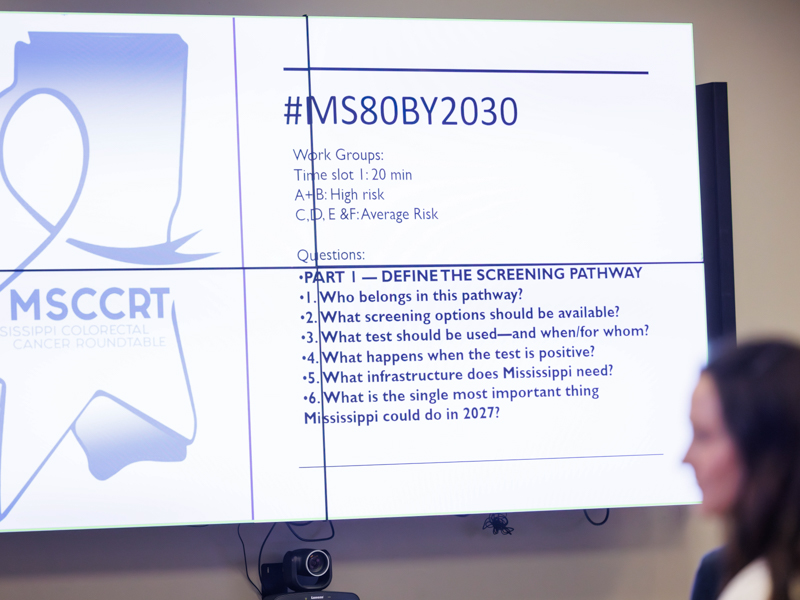
With that in mind, the Mississippi Colorectal Cancer Roundtable launched the 80 by 2030 Colorectal Cancer Screening campaign at its annual meeting on Thursday at the Mississippi State Department of Health. This screening initiative is aimed at getting 80% of eligible 45–59-year-old Mississippians screened for colorectal cancer by 2030.
The roundtable was created in 2019 by state lawmakers. The Cancer Center and Research Institute at the University of Mississippi Medical Center organized the roundtable to lead and coordinate statewide efforts to prevent and eliminate colorectal cancer as a cause of death in the state.
“We have tests that work, we have people to screen, and we have people in this room who want that screening to be done,” said Dr. Manju George, chair of the roundtable, assistant professor of population health science at UMMC’s John D. Bower School of Population Health and a community outreach team member and researcher at the UMMC Cancer Center and Research Institute.
Mississippians ages 45-59 are the focus of this screening campaign because only 38.4% of this age group are screened for colorectal cancer, and for ages 50-59, the screening rates are slightly better at 62.3%, based on data from 2024. “I know first-hand how important screening is” said George, who convened the roundtable meeting. She is an early onset colorectal cancer survivor and was diagnosed in 2017 at age 44.
Mississippi has one of the highest colorectal cancer mortality rates in the country. From 2018-2022, the state’s colorectal cancer death rate was about 17 deaths per 100,000 people. The national rate is 13 deaths per 100,000.
In 2025, colorectal cancer resulted in 3,157 deaths in the state, according to the Mississippi State Department of Health’s 2025 Burden of Cancer report.
The state also has one of the highest incidence rates for colorectal cancer, at about 46 cases per 100,000 people. The national average is 37 cases per 100,000. Cancers of all types are the second leading cause of death in Mississippi, following heart disease.
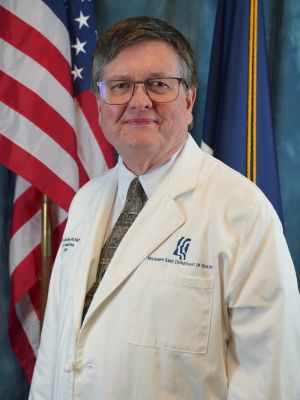
“We have a lot of low-hanging fruit in Mississippi. We have lots of opportunities,” said Dr. Daniel Edney, state health officer. Among those are educating patients and health care providers and boosting access to screening options from blood test to colonoscopy, which can detect and remove pre-cancerous polyps.
“This is one cancer we can reduce the incidence of just by screening,” Edney said.
The 80 by 2030 initiative follows 70x2020, which surpassed its 70% screening goal only to see screening rates decrease due to the COVID-19 pandemic. That initiative was launched in 2015, a time when about 52% of colorectal cancer in the state was diagnosed at an advanced stage.
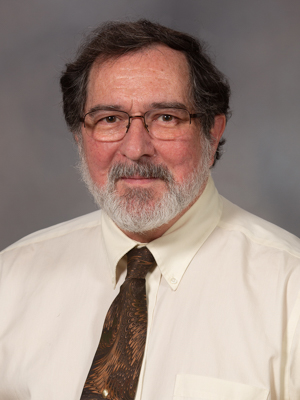
“We met our goal and exceeded expectations,” said Dr. Roy Duhe, past president of the Mississippi Colorectal Cancer Roundtable and a retired professor of pharmacology and radiation oncology at UMMC. Disparities had been reduced during 70x2020 as well, and screening rates in 2024 for African American Mississippians were close to 70% and above the rates for white Mississippians.
Colorectal cancer screening should start at 45, the U.S. Centers for Disease Control and Prevention recommends, but people at higher risk, such as those with a family history of colorectal cancer or polyps, should be screened earlier.
Early onset colorectal cancer, a colorectal cancer diagnosis before age 45, is increasing worldwide, George said. “Starting to screen at 45 is one way to reduce the impact of this screen-preventable cancer.”
Screening by colonoscopy is considered the gold standard for colorectal cancer screening as it can find and remove polyps, preventing cancer from forming, but this screening method may be out of reach for uninsured and underinsured Mississippians. Others may be reluctant because of the nature of the test and the prep and anesthesia involved.
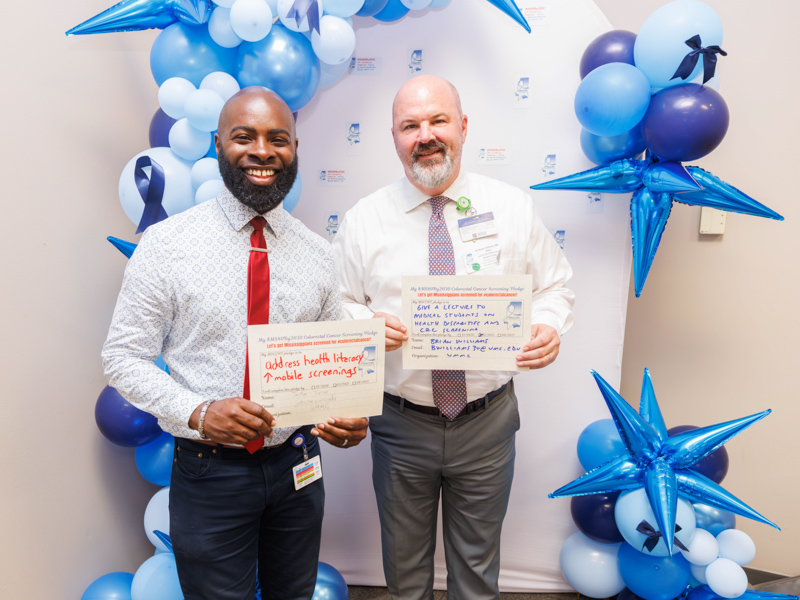
“Colonoscopies have the greatest degree of accuracy, but these other tests can bring more people toward colorectal cancer screening, especially those who are otherwise going unscreened,” said Dr. Justin Turner, assistant professor of preventive medicine and a community health officer for CCRI. “Options that are easier and more accessible can help more people take that first step toward early detection, and early detection saves lives.”
Stool tests such as the fecal immunochemical test use antibodies to detect the presence of blood. The FIT-DNA test also looks for altered DNA, a sign of cancer, in stools. Blood tests for colorectal cancer look for abnormal DNA in the bloodstream. Positive results from these tests should be followed by a colonoscopy.
“By giving people more ways to get screened, we can reach Mississippians who might not otherwise take that step,” Turner said. “These tests won’t replace colonoscopy for those at higher risk, but they can help more people begin the screening process.”