


That’s My Job: Mobility technicians
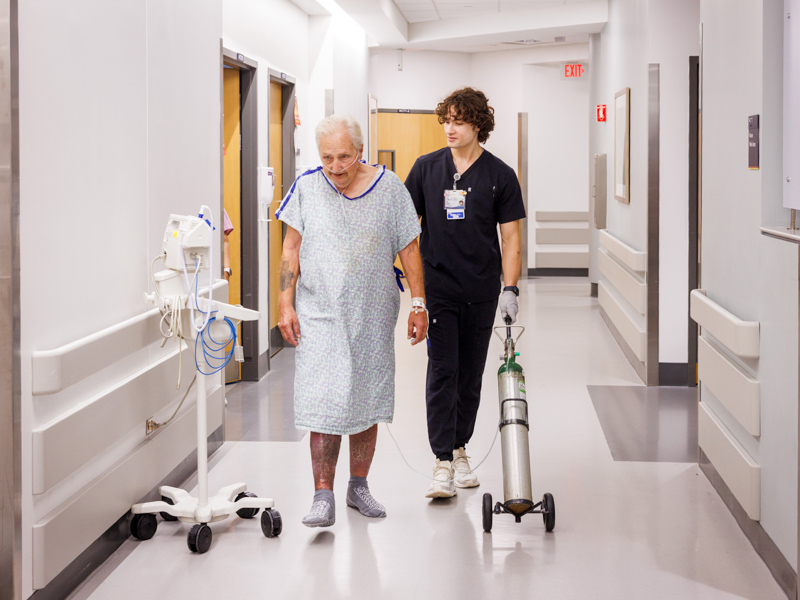
Mobility is medicine.
That’s the mantra these days for people helping patients recover from all manner of conditions that can keep them in bed and away from living life.
“When patients recover from a stroke, certain types of surgeries or transplants, it’s not uncommon for them to want to just stay in bed,” said Undrea Nash, mobility tech supervisor at the University of Mississippi Medical Center. “We encourage them to mobilize to improve mobility, better health, stability and well-being.”
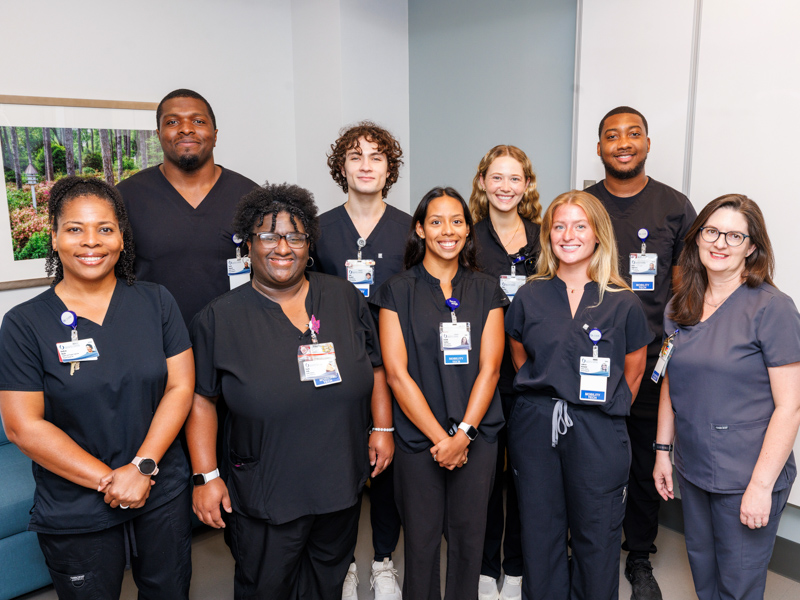
A team of people who work alongside nursing staff in the adult hospital to assist patients to get up and move around – and feel like themselves again.
“Mobility techs are currently working with a wide variety of patients across multiple hospital units,” Nash said. “They assist with individuals recovering from transplants and neurosurgery as well as those on medical-surgical units. This can include patients dealing with strokes, cancer, diabetes or a variety of other disorders.”
The job acts as a supplement to physical therapy, occupational therapy and nursing. Techs help patients make strides toward improved mobility using the Bedside Mobility Assessment Tool, a guideline of the American Nurses Association and given by nurses upon patients being admitted. It identifies a patient’s mobility level at each shift a nurse completes it, with the level changing often throughout the patient’s stay. It evaluates the ability to make certain movements, such as sitting up independently at the bed’s edge without assistance.
Depending on the patient’s BMAT level, mobility equipment may be needed. Some of that equipment can include various types of patient lifts and rolling walkers, appropriate to the patient’s progress.
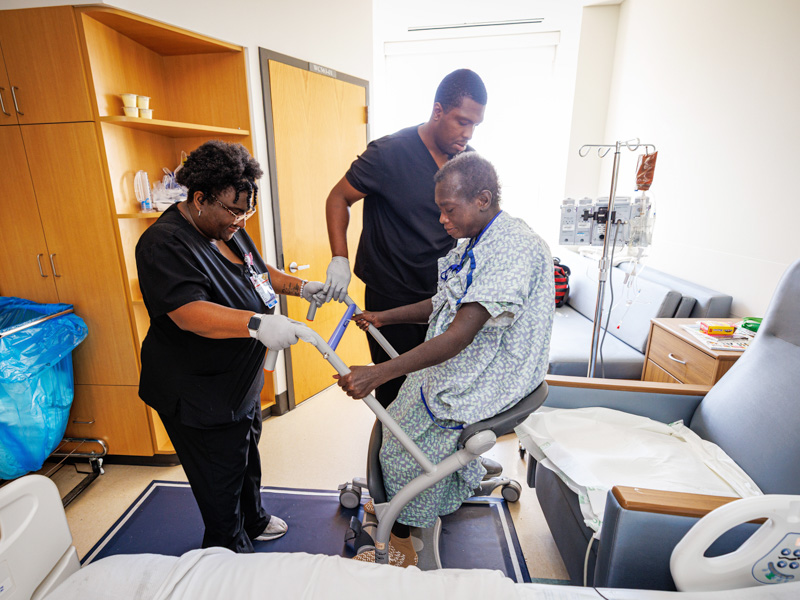
“I’ve seen patients go from being completely bedridden after a stroke or serious accident to sitting on the edge of the bed, then standing, walking with a walker and eventually becoming independent,” said John Stephen Nasekos, among seven techs working in the adult hospital. “Seeing that progression first hand has shown me that mobility is more than just getting patients moving.”
There’s a mental aspect built into mobility medicine as well, one that puts the techs in a cheerleading role of sorts – an important intangible box to check on the road to recovery.
“I’ve loved working with patients in recovery in health care settings prior to this,” said Kayla Kelly, a technician who can relate to her patients thanks to her own experience with her grandmother. “I’ve seen patients have setbacks at first, then become very mobile. It’s very inspiring to see them move around despite their condition coming in.”
Each day working with patients adds quality experience for the seven techs as their health care careers take shape.
“The role gets them experience working in an academic medical center and Level I trauma center,” said Sacha MacGown, director of inpatient rehabilitative services. “They interact with so many different teams of specialists, which makes for quality interdisciplinary teamwork.”
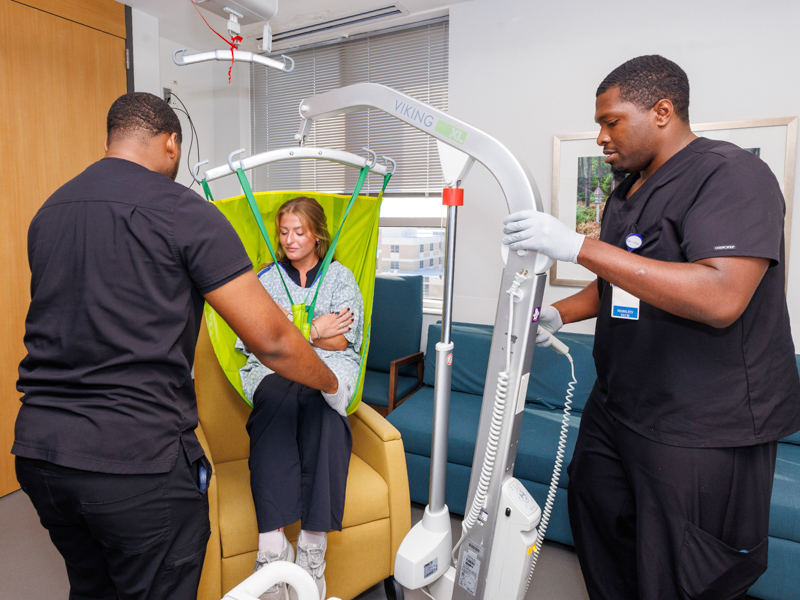
Tavian Johnson, of Madison, sees a gateway to physical therapy school thanks to his work helping people move again.
“I can’t think of a better job to prepare for PT school,” Johnson said. “I’ve enjoyed being able to get health care experience. It’s the perfect stepping stone.”
The team’s partners in nursing see the value of the mobility tech team worth more than just being by the bedside.
"It’s all in the interest of having patients leave our hospital at or better than they came in, in terms of their baseline mobility and conditioning,” said Jonathan VanLandingham, acute inpatient nurse manager. “And that connects to the larger issue of public health. By enhancing the mobility of our patients, it’s one of many efforts to reduce length of stay. There are patients in parts of the state waiting on the care they need because there’s not a space for them to be. The role the techs play helps us ensure we can provide the care needed across the state of Mississippi.”