


Federal programs transform health research in Mississippi
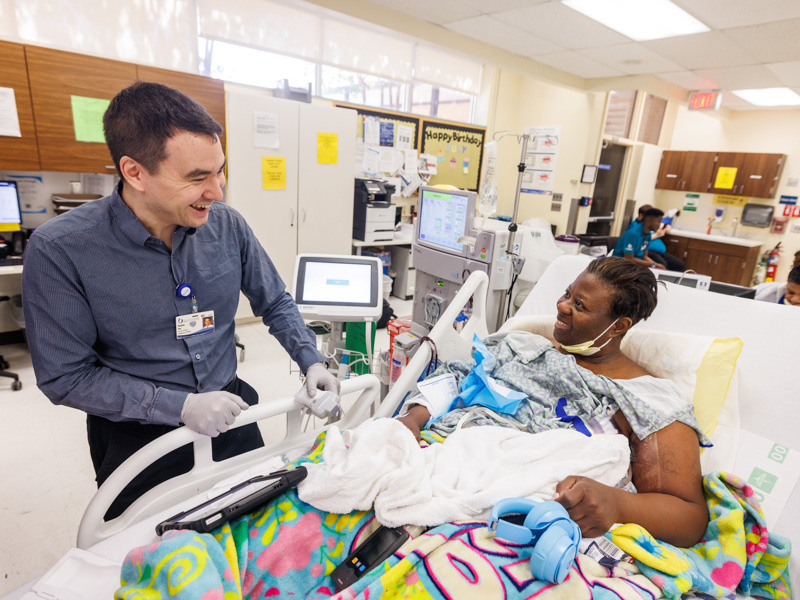
For decades, Mississippi has faced a difficult reality with consistently dismal U.S. rankings – highest rates of diabetes, obesity, hypertension, cardiovascular disease, chronic kidney disease, maternal mortality and infant mortality. Yet despite these enormous burdens, Mississippi historically received far less federal biomedical research funding than many other states.
The challenge was not a lack of scientific talent or commitment. It was a lack of infrastructure, research capacity and access to the resources necessary to compete successfully for major federal funding and conduct large-scale clinical and translational research.
That is precisely the problem the NIH's National Institute of General Medical Sciences sought to address through its Institutional Development Award, or IDeA, program. It was created to strengthen biomedical research capacity in states that historically received lower levels of NIH funding. The IDeA program invests in research infrastructure, workforce development, faculty mentoring, clinical research capacity and institutional competitiveness. Its goal is simple but powerful: ensure that scientific discovery occurs not only in a handful of well-funded regions, but also in states where disease burden is high and health disparities are significant.
Few examples illustrate the success of that strategy more clearly than the Mississippi Center for Clinical and Translational Research, or MCCTR, at the University of Mississippi Medical Center.
Now celebrating its 10th year and seeking renewal, MCCTR stands as one of the most important research investments ever made in Mississippi. As the center seeks another five-year extension, its record offers compelling evidence of how federal investment can transform a state's research enterprise while improving the health of its citizens.

"It is not just about continuing a program," said Dr. Joey Granger, director of MCCTR. "It's about securing and scaling a decade's worth of progress for both the University of Mississippi Medical Center and our MCCTR partners."
Established in 2016, MCCTR was created to address a critical gap in Mississippi's health and research landscape.

Dr. Michael Hall, chair of the School of Medicine and co-principal investigator, said, “MCCTR is focused on improving health outcomes in the state as well as other places where health outcomes have lagged behind. Our main focus is to positively impact adverse health outcomes for Mississippians.”
The center was designed to strengthen the state's ability to conduct clinical and translational research focused on diseases that disproportionately affect Mississippians, particularly those living in rural, underserved and economically disadvantaged communities.
From the beginning, MCCTR focused on conditions responsible for much of Mississippi's disease burden, including diabetes, obesity, hypertension, cardiovascular disease, chronic kidney disease, cancer, dementia and maternal-fetal disorders.
Just as importantly, the center was designed to create the infrastructure necessary to support research long into the future.
Before MCCTR, investigators often lacked coordinated access to advanced biostatistics support, clinical research infrastructure, pilot funding opportunities, community-engaged research resources and formal mechanisms for collaboration across institutions. Research efforts frequently operated in isolation.
MCCTR changed that.
Building capacity and translational engine
Over the past decade, the center has built a statewide clinical and translational research network that connects investigators, health care providers, public health leaders and community partners throughout Mississippi.
A defining feature of MCCTR is its commitment to translational science – moving discoveries from laboratories into clinics and ultimately into communities.
According to Granger, “The IDeA program has helped shift Mississippi from being structurally disadvantaged in biomedical research to becoming strategically competitive. It has built infrastructure, trained investigators, expanded partnerships, improved grant competitiveness and created the conditions for sustained translational research in a historically underfunded state."
Hall concurs. “MCCTR provides necessary support and infrastructure, which enables systems to advance discoveries made in labs or other discrete settings to the population level to have tangible benefits on health outcomes.”
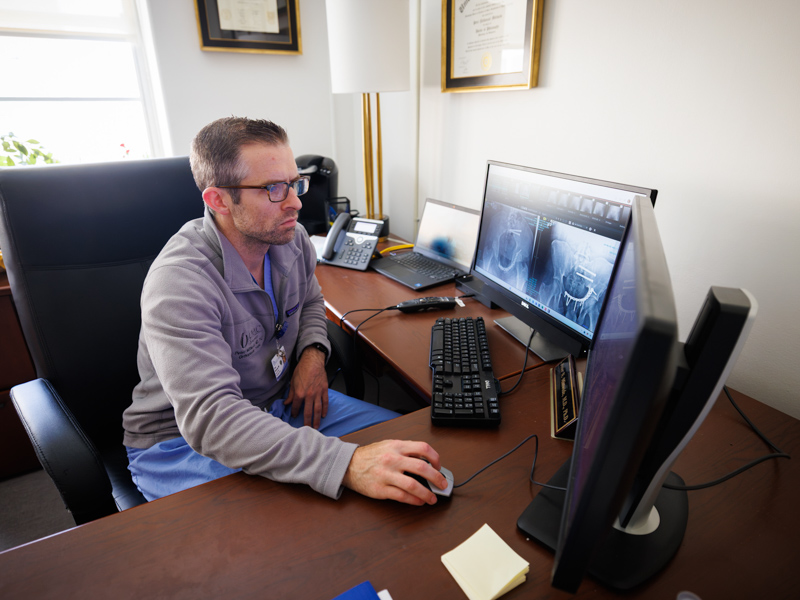
One example of translational impact comes from a multicenter study led by Dr. Peter Mittwede, an assistant professor of orthopaedics and MCCTR research fellow. His study examines whether patients with certain pelvic and hip socket fractures can safely begin walking sooner after surgery.
Traditionally, patients have been required to avoid putting full weight on the injured area for weeks or months. Early findings from the study, which has enrolled nearly 30 patients, suggest that carefully selected patients may benefit from earlier mobility.
Mittwede recently treated 21-year-old patient Latravis Bell, who was assigned to the early weight-bearing group and was already back to running just three months after surgery – an outcome that likely would not have been possible under traditional recovery protocols. While the research is still ongoing, the study demonstrates how MCCTR-supported investigations can help translate clinical questions into evidence that may ultimately improve recovery and quality of life for patients throughout Mississippi and beyond.
Bell of Greenwood praised the orthopedic team for its attentive, compassionate care and said the surgery put him "back on track." His message to others facing similar injuries: trust the process and know that "UMMC is there for you, and you're in good hands."
Harnessing the power of MCCTR and its cores
MCCTR provides resources that no single department could sustain independently.
Among these programs, the Pilot Projects program has been particularly game changing. Funding allows researchers to generate feasibility data, establish collaborations and test innovative ideas before pursuing larger NIH grants. In many cases, this support represents the critical bridge between a promising concept and a nationally competitive research program.
But infrastructure alone does not improve health. The true measure of success is whether research reaches the people who need it most — extending beyond university laboratories and into communities throughout Mississippi.
Through its Community Engagement and Outreach core, investigators work directly with patients, caregivers, community organizations and local leaders before research questions are finalized. This approach produces more relevant studies, builds trust among historically underrepresented populations and increases the likelihood that successful interventions will be adopted in real-world settings.
The impact is particularly important in a state where transportation challenges, poverty and limited health care access often create barriers to participation in research and specialty care.

Dr. Caroline Compretta, assistant vice chancellor of research, said, “The chronic disease burden in Mississippi is not just a clinical problem, but it is a community problem. MCCTR and the Community Engagement core work to bridge that gap. They ensure that the discoveries made in our laboratories and clinics are translated into real interventions that reach rural residents, underserved families and populations who have historically been left out of the research process entirely. MCCTR-supported projects have helped validate remote health-monitoring technologies that improve blood pressure management in rural patients and enhance glucose monitoring among individuals with diabetes.
These efforts illustrate how translational science can directly address health care for the entire Mississippi population while making research participation more accessible and equitable.
Rather than asking rural residents to travel long distances to academic medical centers, investigators are increasingly bringing research to the communities where Mississippians live and receive care.
Addressing those issues requires collaboration across disciplines and institutions.
“What makes MCCTR so powerful is that it is not a single institution working alone, but a statewide network connecting universities, community partners and national collaborators around a shared mission. That kind of coordinated infrastructure has created the conditions where discoveries made here are disseminated nationally while also reaching the Mississippians who need them the most,” Compretta said.
Hall agreed and said, “The IDeA program provides a robust network of collaborating institutions throughout the U.S., which can leverage our unique populations in clinical studies to ensure better representation and thus, better generalizability to study findings.”
Today, MCCTR serves as a statewide research hub connecting UMMC with other institutions.
Each partner contributes unique strengths:
- Mississippi State University provides expertise in population health
- University of Mississippi expands capacity in pharmacy, drug discovery and behavioral science
- University of Southern Mississippi contributes strengths in population and behavioral health research
- Tougaloo College enhances workforce diversity, community engagement and trust-building within historically underserved populations.
Together, these partnerships create a broader, more representative and more competitive research enterprise.
MCCTR also connects Mississippi investigators to national collaborators, including the Mayo Clinic, the University of Alabama at Birmingham and countless others through the national network of Clinical and Translational Research Centers. These partnerships have expanded scientific expertise, strengthened the workforce and enhanced Mississippi’s ability to participate in large-scale, multisite clinical and translational research initiatives.
The success of MCCTR has been reinforced by another major NIH investment mechanism: the Centers of Biomedical Research Excellence, or COBRE program.
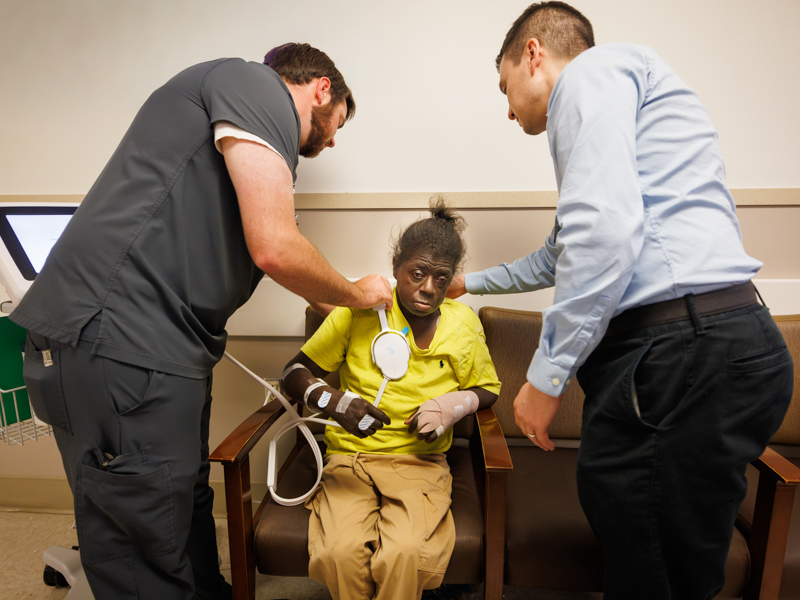
Like IDeA, COBRE was created to strengthen research capacity in historically underfunded states. At UMMC, COBRE centers have become powerful engines for scientific discovery, investigator development and technological innovation.
These centers provide advanced research cores, mentoring programs, pilot funding opportunities and cutting-edge technologies that support investigators throughout the translational research continuum.
The four COBRE programs at UMMC:
- Cardiorenal and Metabolic Diseases Research Center – facilitates research on hypertension, obesity, diabetes, kidney disease and cardiovascular disorders.
- Molecular Center of Health and Disease – provides researchers with cutting-edge capabilities in genomics, molecular biology, computational science and precision medicine.
- Balance and Auditory Research Center – focuses on disorders affecting hearing, balance and communication, including conditions that contribute to hearing loss, dizziness, falls and impaired quality of life.
- Mississippi Center of Excellence in Perinatal Research – investigates maternal, fetal and infant health with the goal of improving outcomes before, during and after pregnancy.
Other COBRE-supported initiatives have expanded research capabilities in neuroscience, dementia, molecular biology, maternal-fetal health and women's health.
Most recently, UMMC secured funding for the Molecular Center of Health and Disease, bringing advanced genomic, transcriptomic and computational biology resources to Mississippi investigators.
Granger said a successful grant renewal would validate a decade of progress and confirm that Mississippi has evolved from a state with limited research capacity into a credible and competitive participant in the national biomedical research enterprise.
He also said continued federal support would preserve infrastructure that has taken years to build while allowing investigators to address emerging challenges in cancer, maternal health, behavioral health, cardiometabolic disease, implementation science and telehealth.
According to Granger, reducing or eliminating programs such as IDeA would “weaken rural health innovation, shrink the biomedical workforce and increase geographic inequities in research funding.”
The consequences would extend beyond Mississippi.
He said states with high disease burdens provide critical opportunities to study health challenges affecting millions of Americans. Excluding those populations from research weakens the nation's scientific enterprise and limits the broader relevance of research findings.
"National science is weaker when it excludes the populations carrying the greatest disease burden," Granger said.
U.S. Sen. Cindy Hyde-Smith has led the push in Congress, reintroducing the IDeA Reauthorization Act to update eligibility standards that haven’t changed since the program’s inception in 1993.
“Mississippi has carried some of the heaviest health burdens in the country. MCCTR is a decade of proof that when we invest in states like Mississippi, we get real results that actually reach the people in areas they’re meant to serve. That’s why I have long championed legislation in Congress to reauthorize and strengthen the IDeA program, so that Mississippi keeps a seat at the table in national biomed research,” Hyde-Smith said.
After 10 years, MCCTR has accomplished the following:
- Strengthened Mississippi's research infrastructure
- Expanded collaboration among institutions
- Trained investigators, improved grant competitiveness and increased opportunities for clinical and translational research
- Created a culture in which scientific discovery is directly connected to community health needs
- Demonstrated that meaningful research can flourish in rural and underserved states when appropriate infrastructure, mentorship and support systems are in place
Granger said the next five years offer an opportunity not simply to continue that progress, but to accelerate it for Mississippi, for UMMC and for the communities that continue to bear an extraordinary burden of chronic disease.