


From diagnosis to TikTok: Children’s of Mississippi toddler shares Type 1 diabetes journey
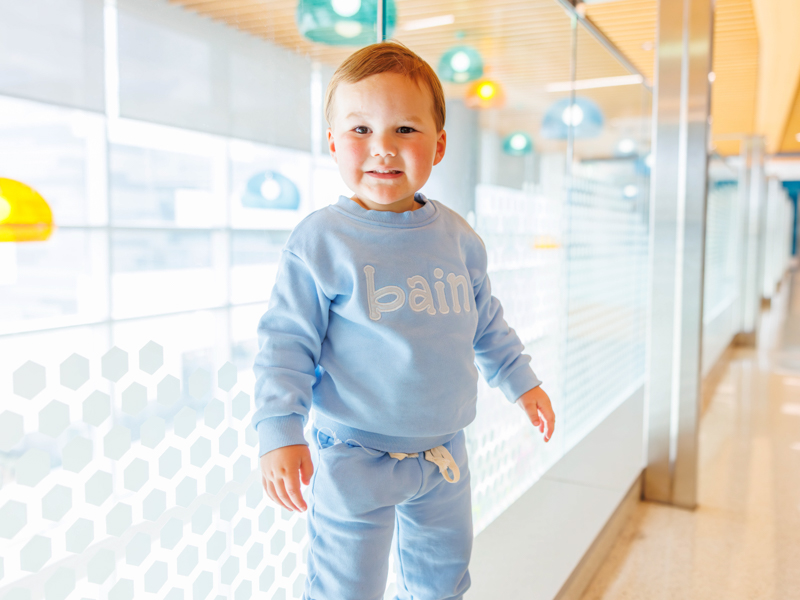
What began as subtle changes quickly became something much more serious for Bain Brandon.
Now 2 years old, Bain is known to thousands on TikTok, where his daily life with Type 1 diabetes is shared with a growing audience. With a big personality and boundless energy, the active toddler has captured the hearts of the internet while helping raise awareness and connect with other families.
At just 12 months old, Bain’s parents did not know what was wrong. He was unusually thirsty, lethargic and rapidly getting worse, with symptoms that became frightening in a matter of hours.
“The week leading to his diagnosis, he was grumpier than usual,” said Marlee Brandon, Bain’s mom. “He was cutting his first set of teeth, so I figured that obviously was making him more irritable.”
At first, Bain still seemed like himself. But the day his parents took him to the emergency room, his condition quickly worsened.
“He started vomiting repeatedly, had labored breathing, couldn’t keep his head up and was grabbing all types of drink,” she said. “Breast milk, water and anything a 12-month-old could reach.”
Eventually, Bain was diagnosed with Type 1 diabetes, at an age when many parents are still learning their child’s routines and early development. The toddler was in diabetic ketoacidosis, a life-threatening complication, at the time of diagnosis.
“I remember the chaos and fear of it all,” Brandon said. “From the moment we were told he was in DKA and being diagnosed with Type 1 diabetes, then finding out we were being airlifted and staying in the PICU until further notice.”
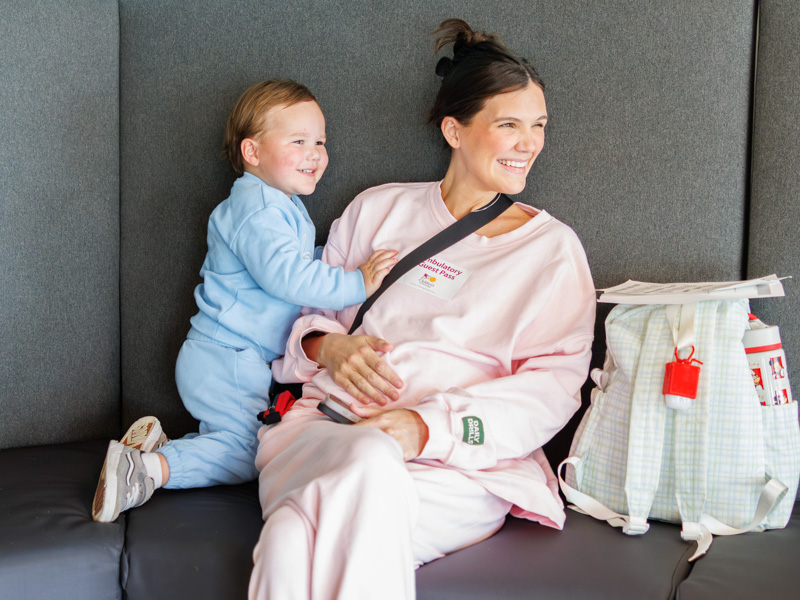
She recalls the uncertainty as Bain was rushed to receive care.
“I vividly remember getting wheeled from the helicopter pad on the roof to the ER triage room, where it felt like 50 medical professionals came in,” she said. “They told me they had never seen a 12-month-old be diagnosed with Type 1 diabetes and in DKA. I felt like our life was over.”
In the aftermath of the diagnosis, Brandon said she struggled with questions and misconceptions.
“I immediately questioned myself,” she said. “What did I do wrong to cause this? How can an exclusively breastfed baby get diagnosed with a chronic health condition at 12 months old?”

According to Dr. Anju Sukumaran, pediatric endocrinologist at Children’s of Mississippi, those misconceptions are common.
“Type 1 diabetes is an autoimmune disorder,” Sukumaran said. “Some parents may believe that their child has developed Type 1 diabetes due to food intake or physical lifestyle, but this is not the case.”
Sukumaran said early symptoms in infants and toddlers can be easy to miss.
“The most common symptoms are when a child starts exhibiting increased thirst, urination and appetite but is steadily losing weight,” Sukumaran said.
In young children, those signs can appear as excess diapers, increased drinking, fatigue or symptoms that follow a recent illness.
“Looking back, those signs were there,” Brandon said.
While the diagnosis can feel overwhelming, advances in care are helping families manage the condition.
“Type 1 diabetes is a manageable condition,” Sukumaran said. “We live in a decade where continuous glucose monitoring devices and insulin pumps are highly efficient managing technologies."
Brandon and her family had to quickly adapt to a new reality.
“I learned that the stereotypical ‘this is how you treat diabetes’ does not work for infants and toddlers,” Brandon said. “The dosages and the treatments are not made for babies.”
For families like Bain’s, education is a key part of that adjustment. Sara Cartee, diabetes educator at the children’s hospital, said children with Type 1 diabetes can still live full, normal lives.
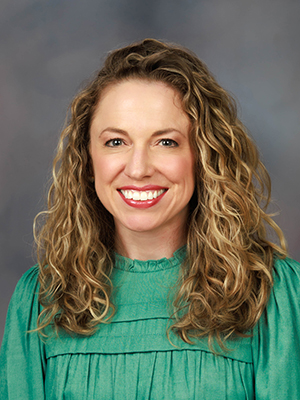
“There is no food that is off limits,” Cartee said. “They can still eat their favorite foods — you just count the carbs and give insulin to match it.”
She encourages families to focus on small steps.
“We tell parents to take it one day at a time,” she said. “It can feel overwhelming, but breaking it down makes it more manageable.”
At the same time, she acknowledges the reality families face.
“You never get to turn diabetes off,” Cartee said. “There is always the next meal, the next check.”
Brandon said even standard guidance had to be adjusted.
“We often treat low blood sugars with 1 to 4 grams of carbs,” she said. “The first time we gave a juice box for a low, he immediately spiked to 500-plus.”
As Bain grows, his care continues to evolve.
“When we started this journey, he had two teeth and didn’t walk,” Brandon said. “Now he is a full-blown toddler talking in full sentences. Those changes come with constant diabetes changes.”
Brandon said one of the most difficult parts of the journey has been finding strength in uncertain moments.
“Being brave in moments that I do not feel brave,” she said. “I often think about how I am setting up his relationship with Type 1 diabetes and his long-term success with it.”
Still, moments of resilience have brought hope.

“The first moment he asked to poke his own toe at 18 months old without a single care in the world,” she said. “It truly blows my mind every single day how brave he is forced to be.”
As Bain’s story unfolded, Brandon began sharing their experience online, something she never initially intended to do.
“I actually never sought out social media,” she said. “After taking care of his Type 1 diabetes from 12 months old to 16 months old, I finally felt confident enough to show others what I had to do.”
A single video quickly changed everything.
“I posted a video of putting his CGM on, and it went mega-viral,” Brandon said. “That single video connected me to other moms of kids diagnosed as young as Bain — something I had never found before.”
Now, her platform has become a space for connection and education.
“I wanted to be a person that other moms could go to because I did not have that,” she said. “I felt so lost and alone those first six months.”
Through sharing their daily life, Brandon said she hopes to bring greater understanding to the condition.
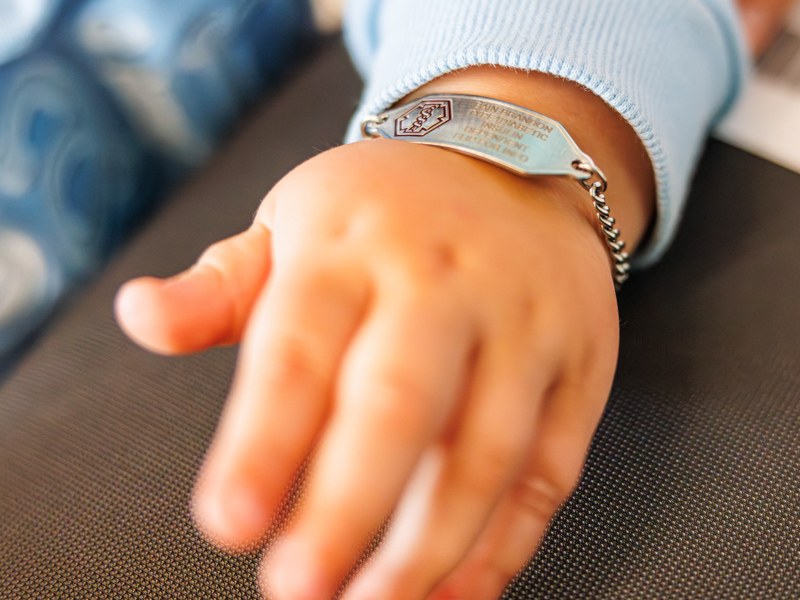
“I wish people knew the complexity of Type 1 diabetes,” she said. “It is so much more than counting carbs and dosing insulin.”
Even when things appear normal, she said, there is constant work happening behind the scenes.
“A toddler can’t tell you how they feel, so we carry that responsibility every second,” Brandon said.
Looking ahead, she finds hope in both medical advancements and the growing community of support.
“What gives me hope is seeing real progress happening right now — from research to advocacy to everyday voices being heard,” she said.
She also points to the power of shared experiences.
“Social media has created a space where families like ours can share the real, unfiltered side of Type 1 diabetes,” Brandon said.
And at the center of that hope is Bain himself.
“The way he shows up, the way he’s already impacting people just by living his life — it’s bigger than we ever imagined,” she said. “If sharing his story helps even one person feel less alone, that matters.”