


That’s My Job: Orthopaedic Researchers
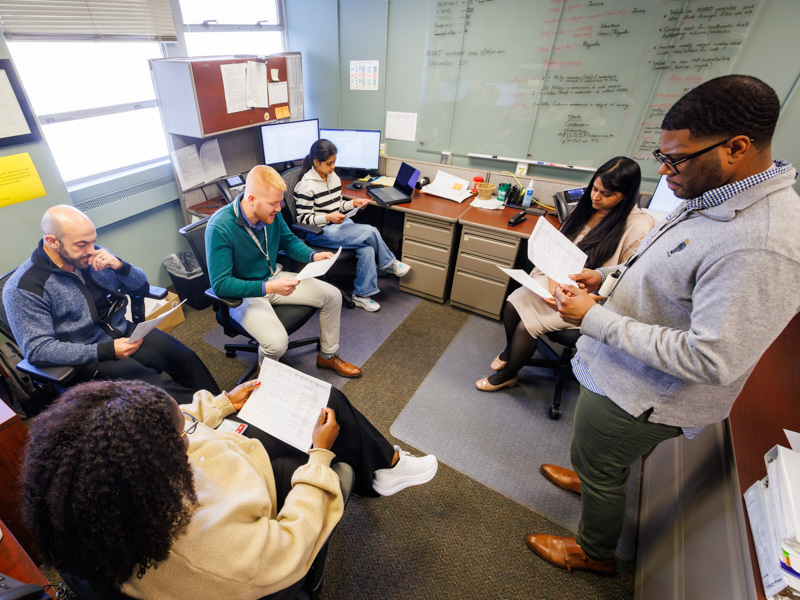
When patients arrive at the hospital with traumatic orthopaedic injuries, their care continues well beyond the operating room. Behind the scenes, a dedicated research team is working to better understand pain, healing, infection prevention and long-term recovery, collecting information that helps shape the future of trauma care for both military and civilian patients.
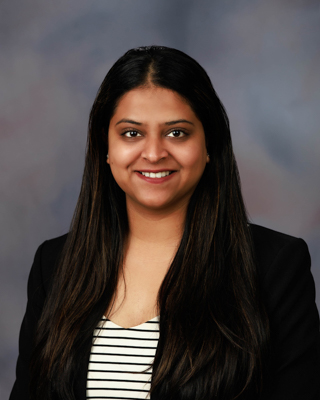
At the University of Mississippi Medical Center, that work is led by Priyanka Nehete, clinical research manager for the Department of Orthopaedics.
Nehete oversees a team of three researchers — research fellows and clinical research associates C. Julian Clark II, Johnathan Riley and Fibiana Oladipo — who collect and analyze patient data over time. Their work is mostly qualitative and observational, focusing on real-world outcomes such as pain levels, ability to bear weight, dexterity and signs of infection.
Patients are first identified during their hospital stay, then followed through post-operative visits with their surgeons.
“The goal is to understand how patients are truly doing as they recover,” Nehete said. “We meet them where they are –in the hospital, in clinics for follow-up –and track their progress over time.”
Much of the groundwork begins at the bedside. Orthopaedic trauma fellows help identify potential research candidates while rounding in the hospital, coordinating closely with Nehete and the research staff to determine eligibility and consent patients.
“We believe people who are interested in advancing medical knowledge to help current and future patients with similar injuries make great candidates for clinical research,” said Riley. “I particularly enjoy it when patients are enthusiastic about learning more about the 'why' behind the treatments of their injuries and choose to participate in clinical research to enhance their own understanding in addition to the benefits it provides society."
The team works with patients of all ages, from pediatric cases to geriatric patients with complex needs. Many of their studies focus on war-related and high-severity injuries, often in collaboration with the U.S. Department of Defense and other leading medical research institutions nationwide.
A significant portion of their research deals with open fractures and wounds, some of the most painful and infection-prone injuries orthopaedic surgeons treat.
“We are very fortunate to participate in and host trials in conjunction with many other top academic medical centers in the U.S. and Canada,” Clark said. “Whether the studies involve improving antibiotic treatment algorithms for open fractures, reporting patient outcomes based on different pain medication regimens, updating the guidelines on the optimal post-operative weight bearing recommendations for traumatic pelvic injuries, or investigating the use of AI to improve patient care, we are committed to staying at the epicenter of innovation in orthopaedic clinical research.”
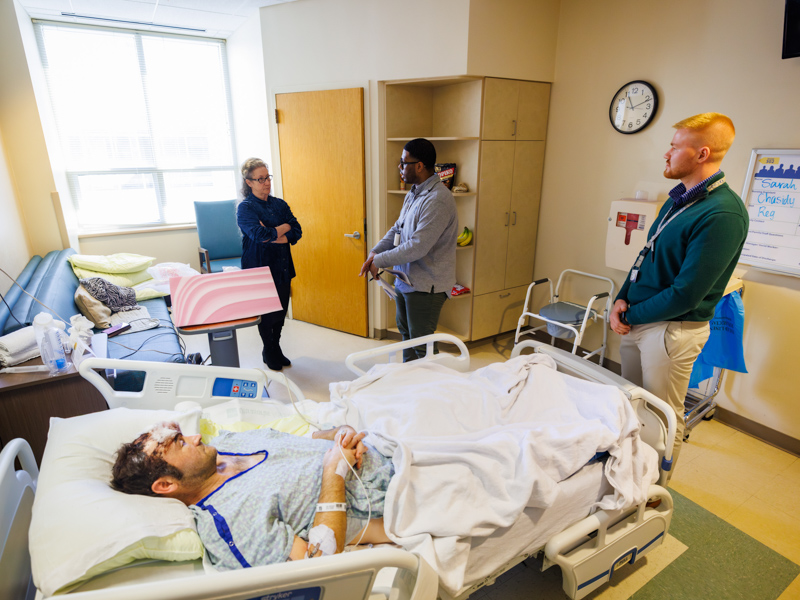
For patients, one of the most familiar faces on the research team is Fibiana Oladipo, a 23-year-old research coordinator with an undergraduate degree in neuroscience and a master’s degree in public health from the University of Alabama at Birmingham.
Oladipo serves as a primary point of contact for patients, coordinating consent, scheduling visits and conducting follow-up calls and appointments.
“I have such a heart for Mississippi, and especially being from Jackson — a hub for traumatic injuries,” Oladipo said. “I feel a calling to be part of lifting up my home state and contributing to its development.”
Nehete’s interest in clinical research developed through direct patient care. “I saw firsthand how evidence-based decisions can improve functional outcomes,” she said. “Orthopaedic surgery offers a unique opportunity to systematically evaluate techniques that directly affect how patients move, heal and regain independence.”
As research manager, Nehete oversees every phase of a study, from beginning to end, ensuring protocols are followed, data is accurate and studies are conducted ethically and safely.
“There’s a misconception that you don’t need a strong scientific background in this role,” she said. “In reality, you’re constantly interpreting data trends, monitoring safety signals and making informed decisions that directly affect patient safety and data integrity.”
The team has conducted several large, multicenter orthopaedic trauma trials that have influenced national practice.
One of those studies, PREVENT CLOT, enrolled more than 12,000 patients nationwide to compare two common blood-clot prevention strategies after orthopaedic trauma. Another, the TOBRA trial, evaluates whether adding topical antibiotics during fracture surgery can reduce deep surgical site infections in high-risk injuries.
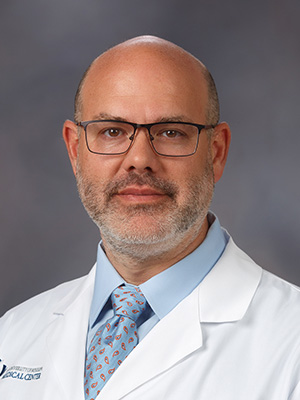
“Priyanka’s leadership has helped UMMC become one of the highest-recruiting centers in the country for orthopaedic trauma research,” said Dr. Patrick Bergin, professor of orthopaedics. "Orthopaedic trauma research is critical for improving survival, functional recovery, and complication prevention after musculoskeletal injury. By generating high-quality, real-world evidence, it guides clinical decision-making, reduces disparities, and informs best practices in acute fracture care.”