


70 Years of Pharmacology: Past, Present, Future
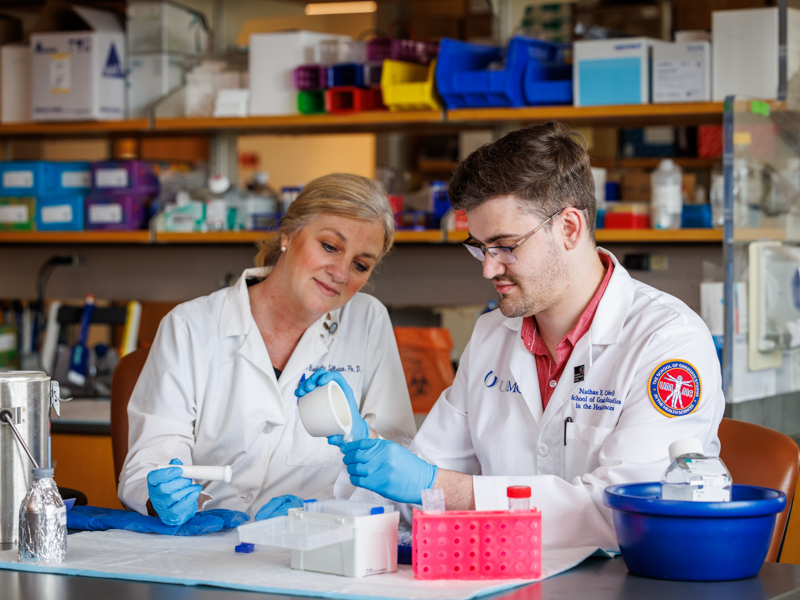
Looking back 70 years reveals a transformative era in biomedical science – one marked by pharmacological breakthroughs that produced life-saving vaccines for diseases such as meningitis and measles.
It was during this period that the Department of Pharmacology at the University of Mississippi Medical Center began a journey that would yield significant advances in cardiovascular research and, decades later, establish the department as a leader in genomics and women’s health research.
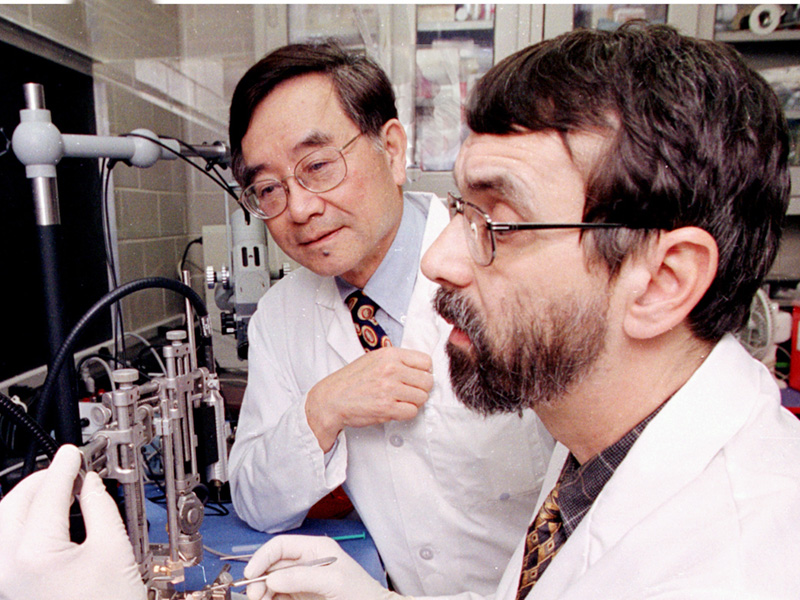
Renamed the Department of Pharmacology and Toxicology in 1972, the department’s teaching and research initially focused on toxicology, drug abuse and the brain’s role in cardiovascular function. This era was shaped by the leadership of Dr. William Berndt (1975-1982) and Dr. Ing K. Ho (1982-2006). During this time, the department gained national recognition for its scientific contributions to understanding intercellular signaling – how cells communicate with one another.
From 2006 to 2009, Dr. Jerry Farley served as interim chair, continuing the department’s research momentum. Among his research was patch-clamp recording, a technique that allowed scientists to measure tiny electrical signals in individual cells. This approach revolutionized understanding of how nerves transmit signals; how the heart regulates its rhythm; how muscles contract; and how many drugs exert their effects.
Despite these scientific advancements, the department faced challenges in the early 2000s, particularly in securing external research funding. In 2009, UMMC’s pharmacology program ranked 91st nationally in extramural funding, receiving just $371,048 in NIH support and producing only 10 faculty publications. However, this period proved to be a turning point rather than a setback.
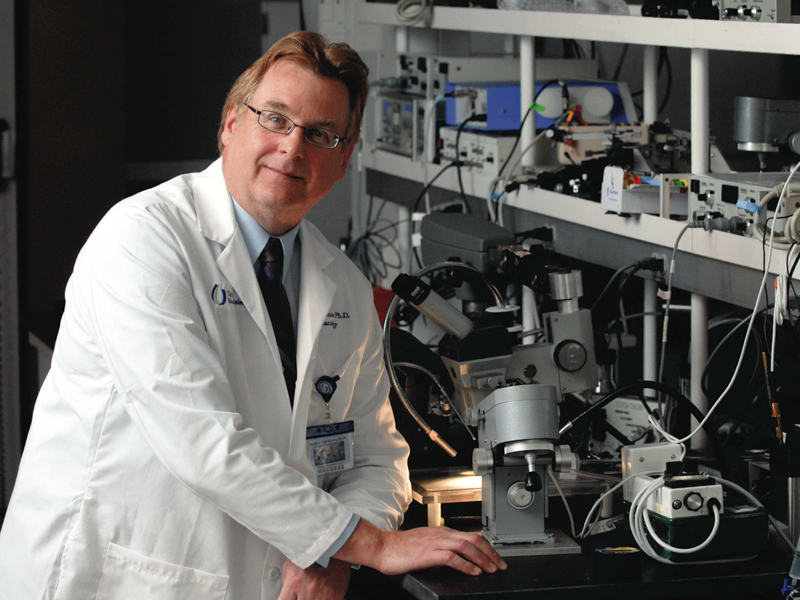
That same year, Dr. Richard J. Roman was appointed chair (2009–2021). Under his leadership, the department began a decisive shift toward research excellence. Within his first year, NIH funding rose to $1.5 million, and the department’s national ranking improved from 91st to 76th, eventually climbing into the top 50s.
“Basically, I oversaw the rebuilding of the department,” Roman said. During his tenure, faculty numbers grew to 15, and the department’s annual budget continued to increase.
Roman credits his background in chemical engineering for shaping his technology-driven, hands-on approach to science. A self-described bench scientist, he emphasized inventing and developing new research tools while training students directly in experimental techniques such as surgery, immunohistochemistry and advanced instrumentation.
Throughout this decade, the department evolved into a highly collaborative and innovative research hub by developing genetically engineered animal models; expanding genomic and proteomic research; and strengthening translational science efforts aimed at moving laboratory discoveries toward patient care.
In 2018, the department’s graduate program – formerly known as Medical Pharmacology – was renamed Experimental Therapeutics and Pharmacology. The change better reflected the department’s modern scientific focus and enhanced its competitiveness among prospective students and funding agencies.
A second major leadership transition occurred in 2021 when Dr. Babbette LaMarca, formerly vice chair, was appointed chair. Under her leadership, the department broadened its research portfolio while maintaining a strong foundation in cardiovascular science.
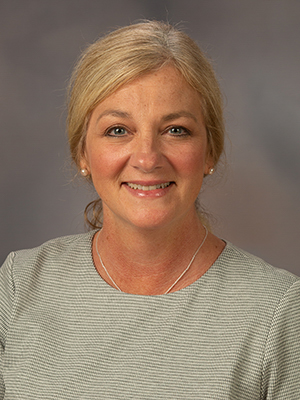
“A defining strength of the department today is the breadth of experimental models and methodologies employed,” LaMarca said. “These include transgenic and knockout rat and mouse models – with expanded emphasis on genomics, proteomics, lipidomics, immunological and translational research.”
LaMarca said, “Since becoming chair and establishing our Clinical Research Core, I have emphasized the importance of clinical research within a basic science department. Over the past three years, the core has helped launch more than 40 clinical studies, allowing investigators to better focus on the clinical relevance of their research. After all, the most important outcome of research is improving health care for our patients.”
She also highlighted the establishment of the Mass Spectrometry Core, Mitochondria Core and Molecular and Genomics Core, led by Dr. Michael Garrett, now chair of the Department of Cell and Molecular Biology. These resources support translational and clinical research in conjunction with the BioBank, the institution’s central tissue repository.
LaMarca added, “In the past three years, we have successfully integrated the Biobank, the Women’s Health Research Center and the Perinatal Research Center into our department. By doing so, we hope to cultivate new collaborations among researchers who may not have worked together previously.”
The department received a boost from NIH’s Specialized Center of Research Excellence grant, which focuses on preeclampsia and hypertensive disorders of pregnancy.
“With the recently funded SCORE grant, we are now better positioned to support the newly approved Mississippi Preeclampsia Collaborative Center. This initiative will provide a platform for researchers and physicians to work with women who have experienced preeclampsia and their children, helping us better understand the long-term health consequences of the disease.”
Furthermore, she said, “Through these centers, we also hope to strengthen outreach efforts to educate our communities about the importance of maternal health in Mississippi and how improving maternal health can lead to a healthier state overall.”
In July 2023, the department further expanded its research focus with the addition of investigators in women’s health, who transferred from the Department of Cell and Molecular Biology. Over time, the department underwent substantial transformation, including the recruitment of 11 new faculty members and the retirement or departure of nine original faculty.
LaMarca is especially proud of the department’s diversity.
“The current faculty of 24 (10 men and 14 women) represents a wide range of scientific expertise, backgrounds and perspectives,” she said. “This diversity strengthens our research portfolio, mentoring capacity and commitment to training the next generation of biomedical scientists.”
Today, the Department of Pharmacology and Toxicology has increased extramural funding to more than $6 million, comprised of funds from the NIH, the pharmaceutical industry, the Department of Defense and the American Heart Association. The department now ranks in the upper third nationally for NIH funding among pharmacology departments at U.S. medical schools.
LaMarca attributes this growth to several key factors: the transfer of the NIH-funded Mississippi Center of Excellence in Perinatal Research or COBRE, led by Dr. Jane Reckelhoff, LaMarca’s recently awarded SCORE grant, and a series of individual research grants secured by departmental faculty.
The department’s success has had a lasting impact on student training and career development through programs such as the Experimental Therapeutics and Pharmacology PhD Program and the Master of Science in Clinical Investigation Program offered by the School of Graduate Studies in the Health Sciences. These programs prepare students for independent careers through rigorous coursework, hands-on research and faculty mentorship.
Over the past 15 years, graduates of the PhD program have achieved strong career outcomes, with many securing positions in academia, the pharmaceutical and biotechnology industries, or science policy and communication.
Looking ahead, LaMarca remains optimistic.
“With unwavering commitment to excellence in research, education and collaboration,” she said, “the Department of Pharmacology and Toxicology is well positioned to continue advancing its leadership and impact in both preclinical and translational biomedical science.”