


TTR gene variant may reveal clues to improving heart health in African Americans
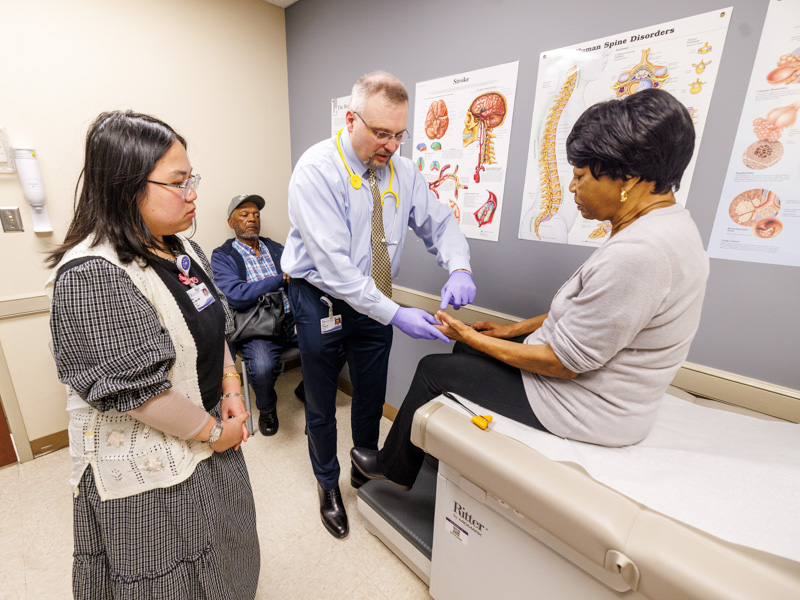
For generations, heart disease has been devastating African American families throughout Mississippi as the leading cause of death – and the “why” remained uncertain. Now, research points to a powerful and previously unnoticed factor: a variant in the transthyretin, or TTR, gene.
This single genetic change may hold the key to understanding – and changing – the course of heart health for thousands.
Transthyretin is a protein produced by the liver, responsible for transporting essential nutrients in the body. But when altered by a hereditary variant, it can misfold and form amyloid deposits that accumulate in vital organs, particularly the heart. Over time, this buildup stiffens the heart muscle, quietly progressing toward heart failure. The condition, known as hereditary transthyretin amyloidosis, often reveals itself via nerve pain, cardiac symptoms and kidney dysfunction and is rarely recognized as part of a single, inherited disease.

“The TTR variant is about uncovering what we weren’t seeing,” said Dr. Pawel T. Pomianowski, the state’s only practicing adult geneticist at the University of Mississippi Medical Center. “Heart disease has touched nearly every family in Mississippi. But for a long time, some of the why remained hidden.”
“What’s important,” Pomianowski explained, “is that this variant appears more often in people with African ancestry. And for a long time, we simply weren’t looking for it early enough.”
Through the UMMC Multispecialty TTR Amyloidosis Clinic, Pomianowski and his colleagues are bringing that hidden cause into focus. In collaboration with the Jackson Heart Study – one of the largest studies of cardiovascular disease in African Americans – and the Molecular Center of Health and Disease, the team is working to improve how inherited conditions such as TTR are understood and treated.
For years, patients were treated based on symptoms alone. Heart failure was managed as a cardiac issue. Nerve pain was sent to neurology. Kidney concerns were addressed in isolation. What went unrecognized was that, for some, these were not separate conditions at all but interconnected based on a single genetic origin.
The clinic and its partners are helping to change the approach.
At the TTR clinic, care is built around the “whole patient and whole family.” Patients undergo not only genetic testing, but also comprehensive evaluations that connect how the heart, nerves and kidneys may all be affected. A multidisciplinary team – including cardiology, neurology, nephrology, genetics counseling and nursing – works together to form a complete picture of the patient’s health.
Genetic testing is the key to this shift.
Rather than waiting for disease to fully develop, testing for the TTR variant allows physicians to identify risks earlier, sometimes years before severe symptoms appear. That knowledge opens the door to closer monitoring, better therapies and informed decisions about long-term care.
“An earlier diagnosis can significantly improve treatment and outcomes,” Pomianowski said. He said it gives patients and families time to understand, prepare and act.
Dr. April Carson, director of the Jackson Heart Study and professor in the School of Medicine, has spent her career helping bring missing pieces into focus. She emphasizes the importance of ensuring that research reflects the populations most affected. JHS has played a critical role in identifying how frequently the TTR variant occurs in African Americans, helping to close long-standing gaps in genetic research.

“Because there are now treatments available for TTR, this knowledge has real clinical implications,” Carson said. “Genetic information can now be combined with traditional measures – like blood pressure or cholesterol – to better understand a patient’s individual risk and guide care.”
She added, “The Jackson Heart Study allows us to see patterns we couldn’t see before.”
And one of those patterns was striking: about 4% of participants were found to carry the TTR gene variant. Four percent might sound small – but in a state such as Mississippi, it represents thousands of individuals and families.
“It changes everything,” Carson said. “Because now we know who may be at risk – and we can act on that.”
For decades, African Americans were underrepresented in genetic research. That meant certain risks such as TTR remained overlooked and underdiagnosed.
The Jackson Heart Study helped change that narrative.
“It’s about representation,” she continued. “When we include diverse populations in research, we uncover knowledge that leads directly to better care.”
Yet alongside scientific progress, the amyloidosis clinic recognizes another essential factor: trust.
Genetics has not always been well understood, and for some communities, it carries a history of skepticism, particularly in African American communities where historical injustices resulted in skepticism toward medical research. At UMMC, providers are intentional about addressing those concerns with clarity and compassion.
“We see trust as something to be earned every day,” Pomianowski said. “Genetic information is simply another tool for protecting health – no different than checking blood pressure or cholesterol.”
“Communication matters,” Carson agreed. “It is important that we make sure patients understand what a particular genetic finding may mean for them and their family – and what it doesn’t mean.”
“It doesn’t define you,” Pomianowski added. “It informs care.”
And that trust is being built, patient by patient, family by family.
Importantly, having a TTR variant does not mean a person will inevitably become ill. Instead, it offers insight and a way to anticipate risk rather than react to crisis. Through counseling and education, patients learn what their results mean not only for themselves, but for their families over the next five, 10 or even 20 years.
Genetic counselor Phuc Do helps guide patients through testing, education and family risk assessment, while genetics nurse Pam Burleson ensures continuity of care and connects patients to ongoing research. Each patient who participates contributes to a growing body of knowledge – one that may ultimately reshape outcomes for future generations.
Carson describes participants in JHS as part of a “legacy of health,” noting that their willingness to contribute to research has already led to major advances in understanding blood pressure, kidney disease and cardiovascular risk.
Now, that legacy is expanding to include genetics.
Individuals interested in participating in the TTR amyloidosis clinic program may contact Vaneda Vang, genetics counseling assistant, at 601‑815‑1172 or vvang@umc.edu.