


Front and Center: Dr. Erik Frandsen
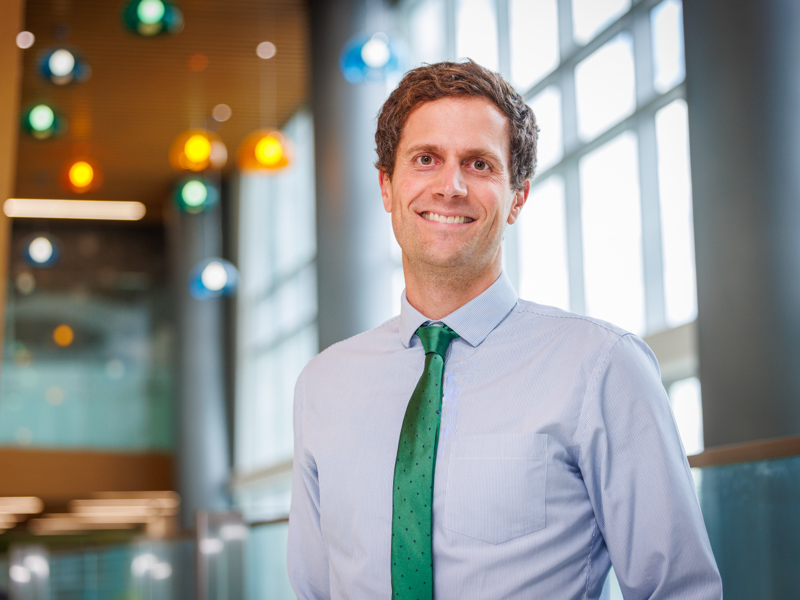
For Dr. Erik Frandsen, joining the pediatric heart team at Children’s of Mississippi was an opportunity to help shape the future of heart care for children across the state.
Frandsen joined the University of Mississippi Medical Center in 2026 to lead pediatric cardiomyopathy, heart failure and heart transplant. After nearly five years on the faculty at Loma Linda University in California, he felt the timing was right to take the next step in his career.
At the children’s hospital, he found an opportunity to bring his experience in pediatric heart failure and transplantation to a growing program with a shared goal: providing Mississippi children with the advanced heart care they need as close to home as possible.
“Our goal should be to be able to take care of them within the state,” Frandsen said. “It’s exciting to be a part of a growing program. It’s exciting to be able to bring my own experiences to this program and to help kind of shape how this program is going to evolve over time.”
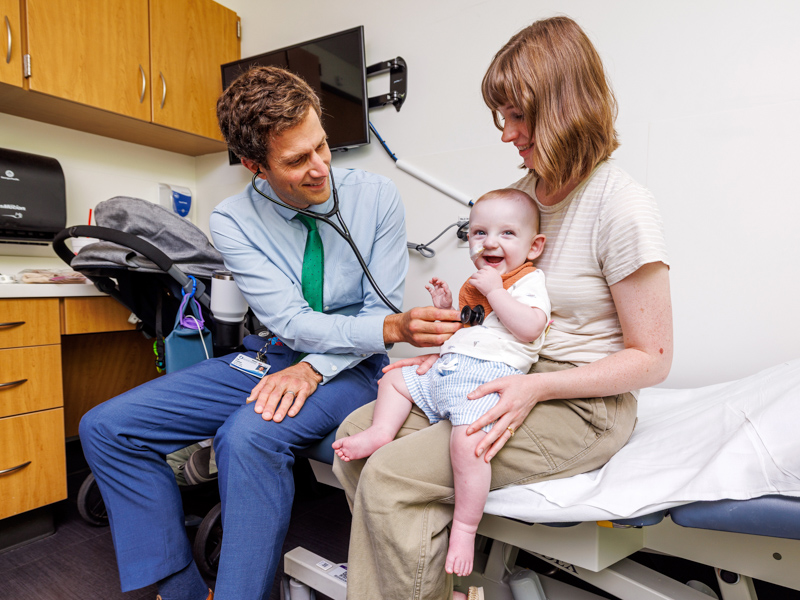
A Washington state native, Frandsen earned his medical degree from Creighton University School of Medicine and completed his pediatric residency at Oregon Health & Science University. He went on to complete a pediatric cardiology fellowship and advanced training in heart failure and heart transplant at the University of Washington and Seattle Children’s Hospital.
His clinical and research interests have centered on pediatric heart failure and transplantation, including caring for children with cardiomyopathies, or diseases of the heart muscle, and those with complications from congenital heart disease who may ultimately need a heart transplant.
His arrival comes at a pivotal time for the Children’s of Mississippi Priscilla and David O’Donnell Heart Center, as the children’s hospital develops its pediatric heart transplant program and a mechanical circulatory support program, expanding the spectrum of cardiovascular care available to children in Mississippi.
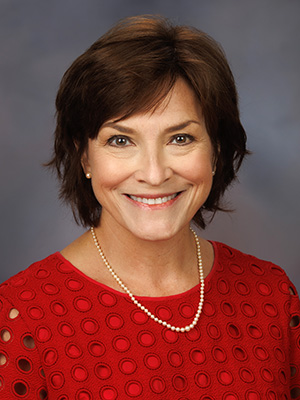
“Dr. Frandsen brings specialized expertise that strengthens our ability to care for children with the most complex heart conditions,” said Dr. Mary Taylor, Susan B. Thames Chair and CEO of Children’s of Mississippi. “As we continue to grow our pediatric heart transplant and mechanical circulatory support capabilities, his experience will help us provide more of the advanced, comprehensive care Mississippi children need while keeping families closer to home and the support systems they depend on.”
Dr. Scott Simpson, chief of the Division of Pediatric Cardiology, said Frandsen brings a level of expertise in advanced pediatric heart disease that is unique in Mississippi.
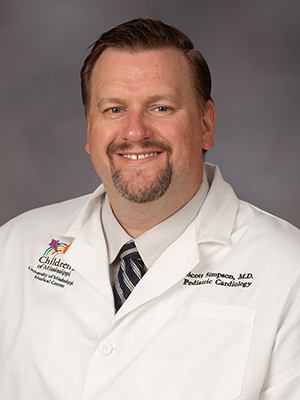
“Dr. Frandsen has background and knowledge literally unlike any other physician in the entire state of Mississippi,” Simpson said. “He was trained to care for some of the most sick pediatric patients we have in the heart center. These patients benefit greatly from his knowledge, confidence and clinical experience.”
Since Frandsen joined the team, Simpson has also seen the qualities he brings to some of the most challenging clinical situations.
“Despite the very intense clinical situations in which he specializes, his demeanor is calm and confident,” Simpson said. “He clearly wants the best for his patients, and his dedication to his craft is inspiring to all of us.”
Frandsen, he said, “seamlessly jumped into his role” and quickly became part of the heart center team.
For Frandsen, the ability to offer advanced heart care within the state has implications that extend well beyond the hospital.
Children awaiting a heart transplant can sometimes spend months in the hospital. Following transplantation, patients also require close medical follow-up throughout their lives, particularly during the first year. Keeping more of that care in Mississippi can allow families to remain closer to their support systems during what can be an unexpected and difficult journey.
“For the vast majority of children and their families, needing a heart transplant is going to be a huge surprise,” Frandsen said. “Being able to offer those services within the state, I think that can just make life even just a little bit easier for these families and remove that worry, because they’ve got enough to worry about.”
An important part of building that continuum of care is mechanical circulatory support, or MCS.
Mechanical circulatory support uses devices to help a weakened heart pump blood through the body. One type, a ventricular assist device, or VAD, is a mechanical pump that supports the heart when it cannot pump enough blood on its own. VADs can support the heart while it recovers or serve as a bridge for patients awaiting heart transplantation.
For children with advanced heart disease, Frandsen said mechanical circulatory support and transplantation go “hand in hand.” Because children may face lengthy waits between being placed on the transplant list and receiving a donor heart, supporting their health during that time can be critical.
“We need to be able to support them during that time,” Frandsen said. “We need to be able to get them the healthiest that we can get them going into transplant, because we know that the healthier they are going into transplant, the better outcomes that they’re going to have after.”
Dr. Ahmad Hamad, a pediatric intensivist, serves as director of the mechanical circulatory support and pediatric ventricular assist device program. Frandsen said intensivists, cardiac surgeons, cardiologists and other specialists each bring different experiences to the program.
“It kind of highlights the teamwork,” Frandsen said. “We’re bringing all our past experience into this program to make the best decisions.”
Providing more of these services at the children’s hospital can also reduce the disruption families experience when they must seek highly specialized care far from home.
“In previous times, these types of patients had to travel great distances to other regional centers to access this type of care,” Simpson said. “As one can imagine, this is incredibly challenging and disruptive to a family and places unnecessary stress on an already stressful situation.”
“Our goal is to be able to provide high-quality care which is equal to or better than our peer institutions for all patients within the state of Mississippi,” Simpson said. “Dr. Frandsen represents a huge step forward toward that goal.”
One of Frandsen’s mentors at his previous institution had spent decades caring for transplant patients. When the team faced difficult discussions about whether a child could have a positive outcome following heart transplantation, Frandsen said his mentor consistently approached those conversations with optimism.
It is a perspective Frandsen has carried into his own practice.
“I think within any organ transplant field, we’re charged with making sure that these children who receive this gift of an organ can be successful,” he said.
As he looks toward the future, Frandsen hopes the pediatric heart transplant and mechanical circulatory support programs will help the children's hospital provide that level of care to children with even the most complex heart conditions.
“I think it all kind of goes back to being able to offer the full spectrum of transplant care,” he said, “so that families can stay within the state, that they can stay closer to their support systems, that we can minimize that disruption as much as possible.”