


New UMMC partnership targets Mississippi’s maternal health crisis

The University of Mississippi Medical Center is partnering with the Mississippi Public Health Institute to address maternal mortality and improve outcomes for mothers across the state through the creation of the Center for Optimizing Maternal Outcomes.
The Center for Optimizing Maternal Outcomes, or COMO, will serve as a resource for consolidating health care data to better understand the factors contributing to maternal mortality and identify actions health care providers and community partners can take to improve outcomes. Information gathered through the initiative will eventually be made available on UMMC’s website. The center will be housed at the public health institute under this UMMC partnership.
U.S. Sen. Roger Wicker secured the funding for the one-year, $1 million project that is expected to launch in September, bringing together physicians, researchers and community leaders to identify needs and deploy resources in 30 counties across southern Mississippi to support expectant and new mothers.
The counties include Adams, Amite, Claiborne, Copiah, Covington, Forrest, Franklin, George, Greene, Hancock, Harrison, Jackson, Jasper, Jefferson, Jefferson Davis, Jones, Lamar, Lawrence, Lincoln, Marion, Pearl River, Perry, Pike, Simpson, Smith, Stone, Walthall, Warren, Wayne, and Wilkinson.

“We will engage with a broad range of interventions, including those further upstream, making sure our population is as healthy as possible going into pregnancy,” said Dr. Thomas Dobbs, dean of the John D. Bower School of Population Health at UMMC. “We want to make sure that pregnant women are adequately supported, not just medically but across all domains to include mental health and social support.”
Dobbs is no stranger to Mississippi’s maternal health challenges. As the state’s former epidemiologist and state health officer, he worked to address numerous health disparities affecting Mississippians. Through COMO, Dobbs hopes Mississippi can reverse troubling maternal health trends by addressing not only pregnancy-related complications but also the underlying health conditions that can place women at greater risk.
“If we think about the things that are really threatening women’s physical health in pregnancy, most are related to chronic disease, hypertension, and cardiovascular issues. Adding hemorrhage and sepsis, these are the things that we know are leading causes of maternal mortality,” Dobbs said.
Dobbs is one of several UMMC experts contributing to the initiative. Dr. Victoria Gholar, assistant dean for student affairs and assistant professor in the Department of Population Health Science, will also contribute to the project, along with Dr. Manuela Staneva, Dr. Paul Byers, Dr. Fazlay Faruque, Dr. Raed Bahelah and Dr. Abigail Gamble, director of research and community engagement at the Myrlie Evers-Williams Institute for the Elimination of Health Disparities.
Gamble’s research and community engagement experience will be particularly important as the team works to understand how maternal health challenges affect underserved communities and how evidence-based solutions can be adapted to meet local needs.
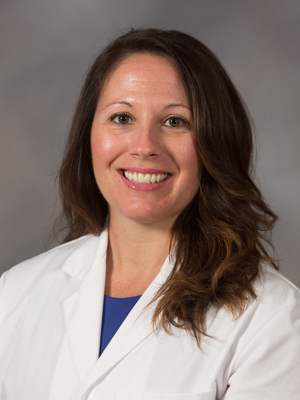
“I think that reducing maternal mortality is the long-term goal and that we are largely medically underserved,” Gamble said. “We hear a lot about patients not being engaged in their care, and I don’t think that is really a true story. I don’t know any woman who wouldn’t want to be engaged in the health and well-being of their baby, but there are structural challenges that come into play.”
Gamble said the team is working on the first phase of the project, which includes establishing the infrastructure needed to engage with communities and local leaders and empower them to make data-informed decisions about ways to improve care for women.
The second phase will take that work directly into communities, where the team will meet with local stakeholders to identify evidence-based strategies that address each community’s needs and determine how those strategies can be implemented effectively.
“We have information, we have knowledge, we know what evidence-based practices are and we have supportive policies,” Gamble said. “But again, it’s translating that into something meaningful at the local level, whether that is a local hospital or local community. How do we make these evidence-based practices work for us while preserving the parts that are evidence-based?
“Mississippi has some of the pieces. We must figure out how we can take those evidence-based approaches and make them work for the local context,” Gamble said.
The need for intervention remains significant. According to the Mississippi State Department of Health’s maternal mortality report released in December 2025, maternal mortality remains an urgent public health issue in Mississippi, with many deaths considered preventable as outlined in the UMMC series, Expecting Better.
The report examines maternal deaths from 2019 through 2023 and the systemic, clinical and community-level factors that continue to place Mississippi mothers at risk. During that five-year period, more than 200 maternal deaths were reported, with the highest number occurring in 2021. In 2024, Mississippi recorded 20 maternal deaths, 19 of which were among Black women.
“It is overwhelming in our Black population,” Dobbs said. “We are also seeing more challenges in older women because we are seeing a shift in women becoming pregnant over the age of 35. We are seeing far more hypertension and maternal morbidity.”
COMO will look beyond the walls of hospitals and clinics to address barriers that can affect a woman’s health before, during and after pregnancy. The initiative will support efforts involving transportation, nutrition and postpartum care for expectant and new mothers.
UMMC students and community and faith-based organizations will also play a role in the initiative. Through listening sessions held across the project area, local organizations will have opportunities to share their perspectives on the challenges mothers face and help health care leaders better understand where resources and interventions could have the greatest impact.
The community-centered approach reflects the complexity of Mississippi’s maternal health challenges and the recognition that improving outcomes will require collaboration among health care providers, researchers, policymakers and the communities they serve.
“There is no single solution to Mississippi’s maternal health care crisis,” said Wicker. “It will take a host of dedicated efforts to support moms, dads and babies to reverse the negative trends. It is my hope that these bills, alongside the hard work done by community members and state leaders, will make Mississippi an even better place to raise a happy and healthy family.”
“In considering maternal health, this is going to be a major challenge for us for many, many years,” Dobbs said. “It is going to take years of commitment, investment and focused attention to turn the dial back on our unacceptable maternal health outcomes.”