


That’s My Job: Pediatric phlebotomists
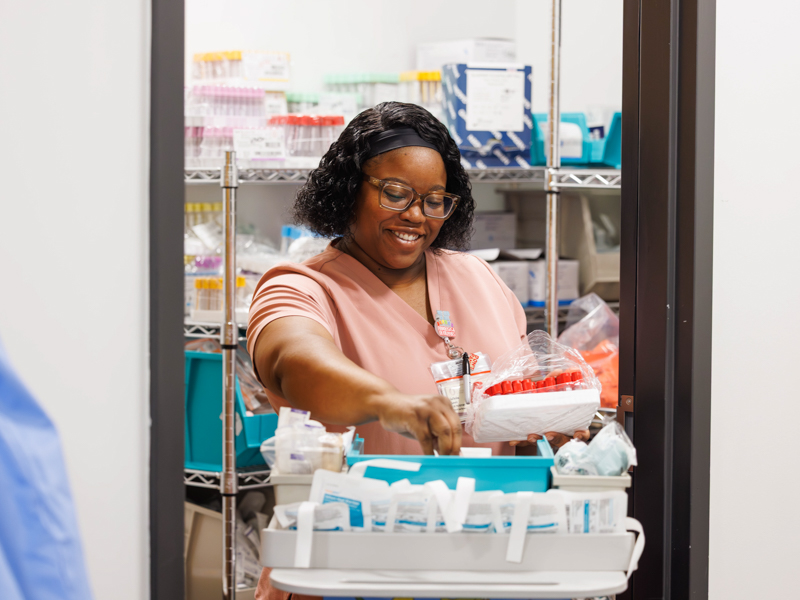
A blood draw may only take a few minutes, but for many children, it can be one of the most intimidating parts of a medical visit. At Children’s of Mississippi’s Sanderson Tower draw station, pediatric phlebotomists use technical expertise, patience and communication to help young patients feel comfortable while collecting the laboratory specimens physicians need to diagnose and treat patients.
“The draw station plays a major role in Children’s. We are sometimes the first to see a patient, and sometimes the last to see a patient,” said Christina Smith, supervisor of the draw station. “It can be a very dramatic experience for the patient, and that is why we make sure we have toys for them after they have their blood drawn.”
The draw station serves as an outpatient collection site for patients from Children’s clinics and outside providers.
“We have orders from the clinics and outside orders as well,” said Demetria Chambers, manager of the Children’s of Mississippi laboratory.
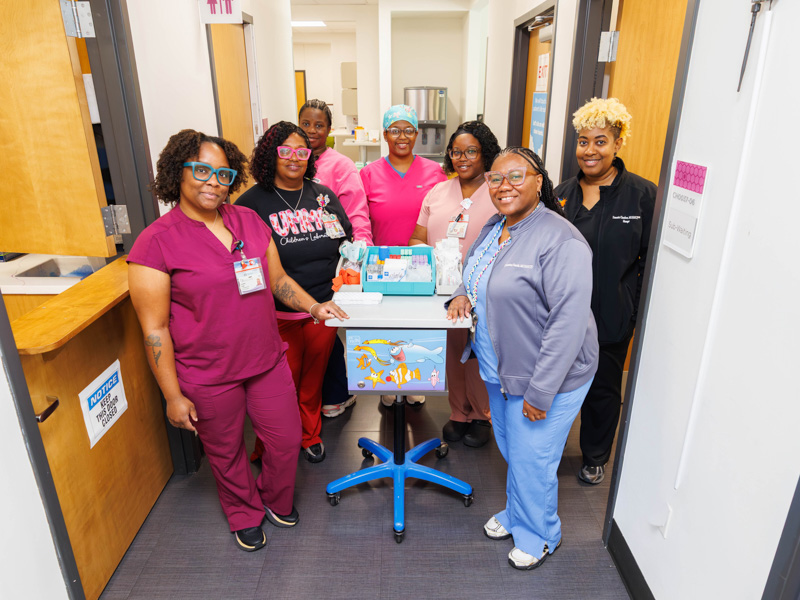
Latasha McClendon, certified phlebotomist, said most patients seen at the draw station are children, although the team also performs specialized testing for adult patients.
“We also see adults for specialized testing, such as genetic testing. We do outpatient draws for patients who come from Children’s clinics,” she said.
The team sees approximately 40 to 60 patients each day, with each visit requiring a combination of technical skill and compassion.
“There’s a lot of crying, and we’re trying to keep both our patients and our staff safe while doing blood draws. We’re here to make sure the patient is taken care of.”
Depending on a child’s age and the amount of blood needed, samples may be collected through various ways.
“Pediatric patients have smaller, more fragile veins that are harder to locate,” Chambers said. “Only small amounts of blood can be safely collected to avoid significant blood loss. The collection sites can vary between heel sticks for newborns, finger sticks for capillary samples and venipuncture depending on the child’s age and amount of blood that is required.”
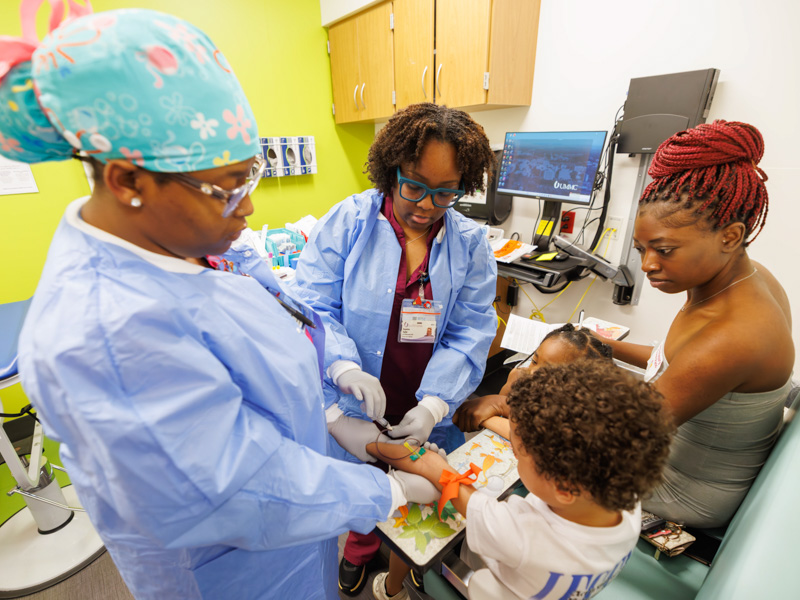
Because each child responds differently to medical procedures, Chambers said successful pediatric phlebotomists must have both clinical expertise and the ability to connect with patients and families.
“Excellent technical skills, patience, strong communication, ability to build trust quickly and adapt to emotional needs” are important qualities in pediatric phlebotomy, Chambers said.
McClendon said the role requires both technical skill and the ability to recognize what each patient needs in the moment.
“The majority of it is technical, but we also have to see how the patient comes in and how they’re reacting,” McClendon said. “We have to be able to get the draw on the first stick.”
Before beginning a blood draw, the team takes time to understand how each child is feeling and adjust their approach.
“When we call a patient back, we pay attention to whether they’re scared, nervous or ready to get it over with,” McClendon said. “Every patient is different, so we watch how they react to us and adjust our approach from there.”
For younger patients who are nervous, building trust can begin with a simple introduction.
“I tell them my name, explain what I am about to do and ask them if they are going to be a big girl or a big boy,” McClendon said. “We have a prize at the end.”
Communication and reassurance are also important tools for helping children feel more comfortable during a blood draw.
“We try to use a soft speaking tone and talk patients through the process, letting them know what’s happening step by step,” McClendon said.
Parents and caregivers also play an important role in supporting children during the procedure.
“We ask parents to help comfort their child,” McClendon said. “They may hold them, sit beside them, hold their hand or even sing to them. Sometimes a cellphone or iPad can also help distract them during the blood draw.”
For some patients, additional support from Child Life specialists can help make the experience less stressful.
“Mainly, we just talk them down and explain what they are going to do,” Smith said. “Sometimes the patient will have a phone in their hands.”
“On occasion, Child Life will be involved and bring a VR headset or even Hollywood for patients we see on a regular basis that we know will need that extra help,” Smith said.
The work performed at the draw station provides physicians with information that is essential to patient care.
“Collecting blood is the most important thing because that is what a doctor is going to see to be able to diagnose the patient,” Smith said. “I believe we serve a pivotal role and are one of the most important parts of patient care.”
Through technical expertise, compassion and teamwork, the pediatric phlebotomists at the children’s hospital help ensure children receive the laboratory testing they need while making the experience as comfortable as possible.