


Reaching the finish line: SOPH students complete dissertations
At the John D. Bower School of Population Health, completing a dissertation represents more than the end of a program. It reflects years of rigorous training, applied research and a commitment to improving health outcomes.
This spring, several SOPH students reached that milestone, contributing research that reflects the interdisciplinary, real-world focus of the school.
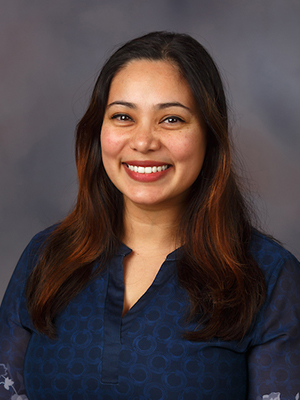 Sabrina Alam
Program: Population Health Science
Dissertation: Maternal Health Policies and Policymaking in Mississippi
Committee: Abigail Gamble (chair), Melinda Krakow, Benjamin Walker, Kedra Wallace
Sabrina Alam’s work examines policies and the policy landscape in Mississippi, focusing on the structural and political decisions that influence policy enactment and maternal health policymaking.
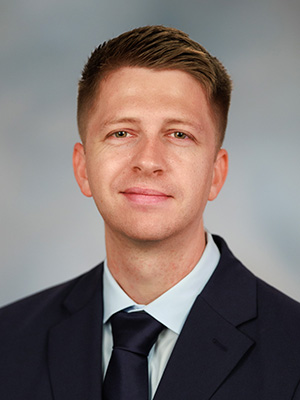 Hunter Sylvester
Program: Biostatistics and Data Science
Dissertation: Unwrapping Multivariate Non-Linear Mixed Effect Models (MNMs): Estimating Abnormality Cascades in Alzheimer’s Disease
Committee: Michael Griswold (chair), Jeannette Simino, Terry Therneau, Murat Bilget
Hunter Sylvester’s dissertation highlights the role of advanced statistical modeling in understanding complex disease processes. His work explores how abnormalities progress in Alzheimer’s disease, translating sophisticated methods into insights that can inform research and clinical decision-making.
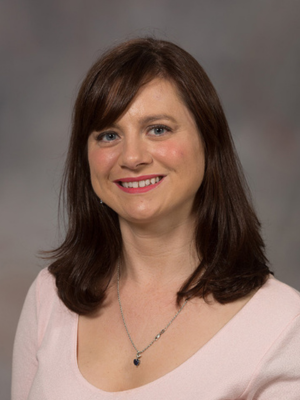 Lauren S. Pongetti
Program: Population Health Science
Dissertation: The Intersection of Environment and Health: Exploring Park Quality, Green Space, and Temperature
Committee: Fazlay Faruque (chair), Benjamin Walker, William Hillegrass, Mahammad Al-Hamdan
Lauren Pongetti’s research explores how environmental factors shape health, with a focus on green space, park quality and temperature. Her work demonstrates how built and natural environments influence outcomes across communities, reinforcing the importance of interdisciplinary approaches in population health.
Completing a dissertation is a significant achievement, but at SOPH, it is also a beginning. These graduates leave prepared to contribute in research, policy and practice, applying their work to improve health in Mississippi and beyond.