


Honoring the past through science: the Asylum Hill Project
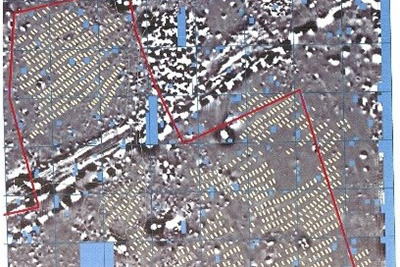
At the John D. Bower School of Population Health, research is often focused on improving the future. But in the case of the Asylum Hill Project, that work begins with honoring the past.
The project recently reached a significant milestone. Since the current phase of excavation began in November 2022, the archaeological team has completed the careful excavation and respectful removal of the 1,000th grave from the former state asylum cemetery located on the University of Mississippi Medical Center campus.
Led by Dr. Jennifer Mack, assistant professor at SOPH and lead bioarchaeologist on the project, the work is both scientific and deeply human. Public estimates suggest the site contains between 4,000 and 7,000 individuals, many of whom were buried without markers or recognition.
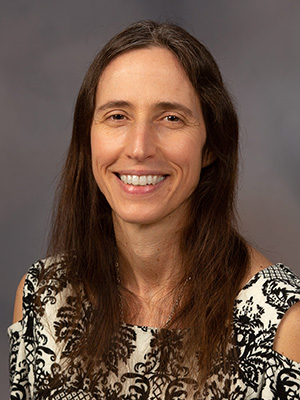
“This work is about more than excavation,” Dr. Mack said. “It is about restoring dignity, telling stories, and ensuring that these individuals are no longer forgotten.”
Each burial represents a life once lived, and the process of recovery is carried out with care, precision and respect. The team’s work includes not only exhumation, but also analysis, documentation and ultimately memorialization.
A Rare Discovery
In March, the team made a particularly notable discovery. During excavation, they uncovered a largely intact cast iron casket, a rare find at the site.
Cast iron caskets, first introduced in the mid-19th century, were expensive and designed to preserve remains over time. The casket recovered at Asylum Hill likely dates between 1860 and 1880 and would have been far more costly than a typical wooden coffin of the era.
Opening the casket required hours of careful work and extensive collaboration across UMMC, including support from environmental health, radiology and biomedical research teams to ensure safety and proper analysis.
While the level of preservation was not as complete as hoped, the remains offered valuable insight. The individual is believed to have been a woman between 30 and 55 years old, with several personal details preserved, including hair and a simple ring.
Findings like this provide rare opportunities to better understand the lives of those buried at Asylum Hill, many of whom have remained anonymous for more than a century.
Science, History and Responsibility
The Asylum Hill Project reflects the intersection of science, history and ethics. It is a reminder that population health is not only about data and outcomes, but also about people, context and care across time.
Through this work, SOPH students and faculty are contributing to a broader understanding of health, inequality and institutional history in Mississippi. Just as importantly, they are helping ensure that those who were once overlooked are now seen, studied and remembered.
At its core, the project embodies the mission of the School of Population Health: to improve health by understanding the full picture, including the social, historical and human factors that shape it.
In doing so, the team is not only advancing research. They are restoring voices, one story at a time.