


Mammography saved Michele Harrison's life twice
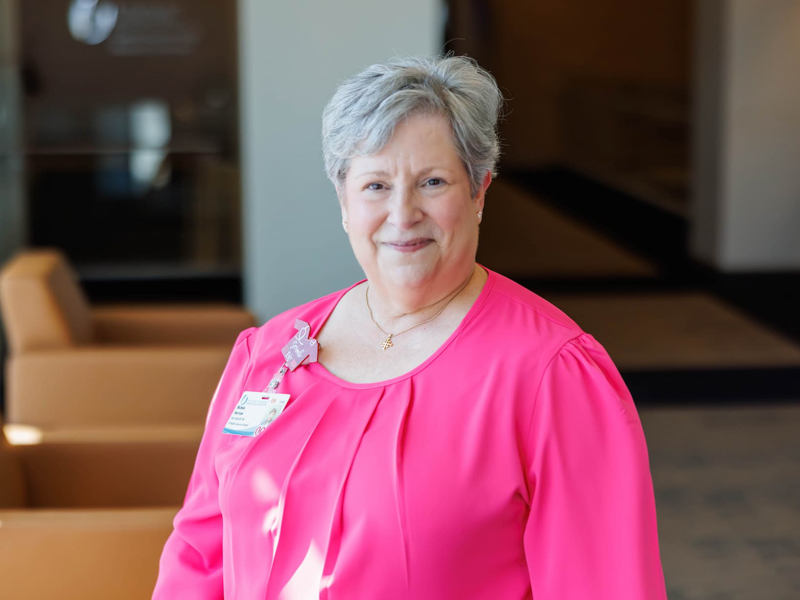
When Michele Harrison helps cancer patients at the University of Mississippi Medical Center's Cancer Center and Research Institute, she knows what they're going through.
The registered nurse in CCRI's ambulatory clinics has beaten breast cancer twice.
"My first bout was in 2010, and it was discovered through a routine mammogram," she said. "I'll be the first one to tell you that breast cancer screening saves lives."
Her cancer was found at stage 0, known as ductal carcinoma in situ. In this stage, the cancer has not moved from the milk ducts of her left breast. Her treatment included a lumpectomy and targeted radiation using a SAVI catheter to avoid whole breast or chest radiation.
The SAVI catheter was placed in the lumpectomy site, and for five days, Harrison went twice a day for five days for radiation seeds to be placed in the catheter. Each of the 10 treatments lasted about 10 minutes. Then she began taking Tamoxifen for six years.
"I was good until 2024," she said.
That year, a mammogram led to a biopsy that revealed stage 1 intraductal carcinoma in her right breast.
"Mammograms saved me two times," said Harrison, noting that she has no significant family history of cancer and no genetic predisposition to the disease.
In her second cancer battle, intraoperative radiation therapy was part of Harrison's lumpectomy, delivering radiation to the cancer site. She also had four rounds of chemotherapy.
"I was proud to ring that bell," she said.
Throughout her cancer battles, Harrison continued working at CCRI, where she helps patients in coordinating scans, referrals and appointments.
"Going through breast cancer twice has made me a much more compassionate nurse," she said.
A Carthage native who graduated from Hinds Community College, Harrison came to UMMC after decades of caring for open-heart surgery patients.
"I never thought I would work in cancer," she said, "but I'm blessed to be here. I have patients who call me and tell me they can't do it, and I tell them they can. In fighting cancer, 90% is mental. You have to make up your mind to fight."