


Children's of Mississippi Center for Cancer and Blood Disorders
Return to Locations Search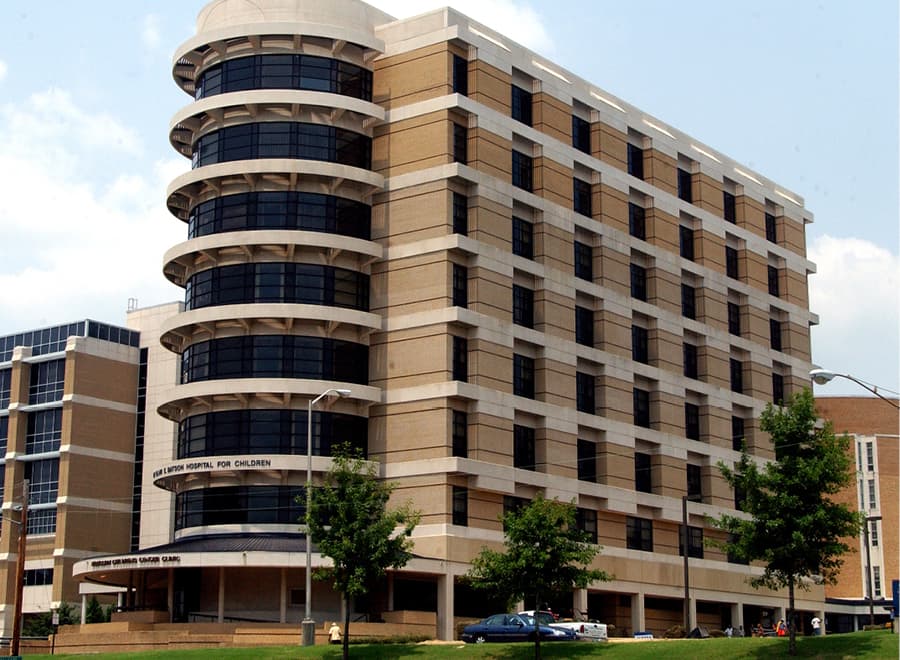
Address:
2500 N. State St.
(inside Batson Tower)
Jackson, MS 39216
Contact Us:
(601) 984-2700
Parking:
Directions:
The Children's of Mississippi Center for Cancer and Blood Disorders is inside Batson Tower. From North State Street, turn onto campus at the stoplight at University Drive (across from Back Yard Burgers). Turn left at the next stop sign, and Garage B will be on your right. Enter Children's of Mississippi Center for Cancer and Blood Disorders through Wiser Hospital; patients should bring parking ticket for validation.
Our Care Specialties at this location:
Our Providers who practice at this location:
| Provider | Specialty Keywords | ||||||||||||||||||
|---|---|---|---|---|---|---|---|---|---|---|---|---|---|---|---|---|---|---|---|
|
Practice Locations:
|
|||||||||||||||||||
Laura A. Arnold, MDSpecialties:
Children's Cancer and Blood Disorders, Children's Hematology/Oncology
View Practice Locations
Practice Locations:
|
tumor, leukemia, sickle cell, cancer and blood, soft tissue, pediatric cancer and blood disorders, blood, chemotherapy, oncology, oncologist, childrens cancer and blood disorders, radiation, bone marrow, children cancer and blood disorders, neuroblastoma, cancer, oncology, leukemia, pediatric hematology, children's hematology, oncologist, children hematology/oncology, neuroblastoma, pediatric oncology, children's oncology, pediatric hematology/oncology, hematology, hematologist, childrens hematology/oncology | ||||||||||||||||||
Jennifer S. Barr, MDSpecialties:
Orthopaedic Oncology, Orthopaedic, Sarcomas (Bone and Soft Tissue Cancers), Orthopaedic Joint Replacement
View Practice Locations
Practice Locations:
|
cancer, orthopaedist, bone, sarcoma, osteosarcoma, orthopedist, orthopedic, liposarcoma, nerve sheath tumor, orthopedic, orthopedist, orthopedic surgery and rehabilitation, orthopaedic surgery, orthopaedist, orthopedic surgery, arthroplasty, arthroscopy, shoulder, knee, orthopaedist, orthopedic, hip, arthroscopic, orthopedist | ||||||||||||||||||
|
Practice Locations:
|
|||||||||||||||||||
Jennifer A. Cox, MDSpecialties:
Children's Cancer and Blood Disorders, Children's Hematology/Oncology
View Practice Locations
Practice Locations:
|
tumor, leukemia, sickle cell, cancer and blood, soft tissue, pediatric cancer and blood disorders, blood, chemotherapy, oncology, oncologist, childrens cancer and blood disorders, radiation, bone marrow, children cancer and blood disorders, neuroblastoma, cancer, oncology, leukemia, pediatric hematology, children's hematology, oncologist, children hematology/oncology, neuroblastoma, pediatric oncology, children's oncology, pediatric hematology/oncology, hematology, hematologist, childrens hematology/oncology | ||||||||||||||||||
Dereck B. Davis, MDSpecialties:
Children's Cancer and Blood Disorders, Children's Hematology/Oncology
View Practice Locations
Practice Locations:
|
tumor, leukemia, sickle cell, cancer and blood, soft tissue, pediatric cancer and blood disorders, blood, chemotherapy, oncology, oncologist, childrens cancer and blood disorders, radiation, bone marrow, children cancer and blood disorders, neuroblastoma, cancer, oncology, leukemia, pediatric hematology, children's hematology, oncologist, children hematology/oncology, neuroblastoma, pediatric oncology, children's oncology, pediatric hematology/oncology, hematology, hematologist, childrens hematology/oncology | ||||||||||||||||||
Sarah E. Elkin, MSN, FNP-BCSpecialties:
Children's Cancer and Blood Disorders, Children's Hematology/Oncology
View Practice Locations
Practice Locations:
|
tumor, leukemia, sickle cell, cancer and blood, soft tissue, pediatric cancer and blood disorders, blood, chemotherapy, oncology, oncologist, childrens cancer and blood disorders, radiation, bone marrow, children cancer and blood disorders, neuroblastoma, cancer, oncology, leukemia, pediatric hematology, children's hematology, oncologist, children hematology/oncology, neuroblastoma, pediatric oncology, children's oncology, pediatric hematology/oncology, hematology, hematologist, childrens hematology/oncology | ||||||||||||||||||
Catherine J. Gordon, MDSpecialties:
Children's Cancer and Blood Disorders, Children's Hematology/Oncology
View Practice Locations
Practice Locations:
|
tumor, leukemia, sickle cell, cancer and blood, soft tissue, pediatric cancer and blood disorders, blood, chemotherapy, oncology, oncologist, childrens cancer and blood disorders, radiation, bone marrow, children cancer and blood disorders, neuroblastoma, cancer, oncology, leukemia, pediatric hematology, children's hematology, oncologist, children hematology/oncology, neuroblastoma, pediatric oncology, children's oncology, pediatric hematology/oncology, hematology, hematologist, childrens hematology/oncology | ||||||||||||||||||
Joaquin Hidalgo, MDSpecialties:
Children's Neurosurgery, Adult Cranial Neurosurgery, Neurosurgery, Spinal Neurosurgery
View Practice Locations
Practice Locations:
|
pediatric, neuropsychology, neurologist, childrens neurosurgery, epilepsy, brain, children neurosurgery, pediatric neurosurgery, neurosurgeon, cranial, brain, neurosurgeon, skull, vascular, back, head, cervical, discectomy, lumbar, scoliosis, herniated disk, neurosurgeon, spondylolisthesis, back decompression, laminectomy, spine, slipped disc | ||||||||||||||||||
Erin A. Jackson, MD, MSSpecialties:
Children's Cancer and Blood Disorders, Children's Hematology/Oncology
View Practice Locations
Practice Locations:
|
tumor, leukemia, sickle cell, cancer and blood, soft tissue, pediatric cancer and blood disorders, blood, chemotherapy, oncology, oncologist, childrens cancer and blood disorders, radiation, bone marrow, children cancer and blood disorders, neuroblastoma, cancer, oncology, leukemia, pediatric hematology, children's hematology, oncologist, children hematology/oncology, neuroblastoma, pediatric oncology, children's oncology, pediatric hematology/oncology, hematology, hematologist, childrens hematology/oncology | ||||||||||||||||||
Hannah G. Jordan, MSN, FNP-BCSpecialties:
Children's Cancer and Blood Disorders, Children's Hematology/Oncology
View Practice Locations
Practice Locations:
|
tumor, leukemia, sickle cell, cancer and blood, soft tissue, pediatric cancer and blood disorders, blood, chemotherapy, oncology, oncologist, childrens cancer and blood disorders, radiation, bone marrow, children cancer and blood disorders, neuroblastoma, cancer, oncology, leukemia, pediatric hematology, children's hematology, oncologist, children hematology/oncology, neuroblastoma, pediatric oncology, children's oncology, pediatric hematology/oncology, hematology, hematologist, childrens hematology/oncology | ||||||||||||||||||
|
Practice Locations:
|
CF, childrens pulmonology, pulmonologist, cystic fibrosis, pediatric, pulmonary, pediatric pulmonology, children pulmonology, pulmonology | ||||||||||||||||||
Cynthia W. Karlson, PhDSpecialties:
Children's Cancer and Blood Disorders, Children's Hematology/Oncology, Psychology
View Practice Locations
Practice Locations:
|
tumor, leukemia, sickle cell, cancer and blood, soft tissue, pediatric cancer and blood disorders, blood, chemotherapy, oncology, oncologist, childrens cancer and blood disorders, radiation, bone marrow, children cancer and blood disorders, neuroblastoma, cancer, oncology, leukemia, pediatric hematology, children's hematology, oncologist, children hematology/oncology, neuroblastoma, pediatric oncology, children's oncology, pediatric hematology/oncology, hematology, hematologist, childrens hematology/oncology, bipolar, psychologist | ||||||||||||||||||
Melissa A. McNaull, MDSpecialties:
Children's Cancer and Blood Disorders, Children's Hematology/Oncology
View Practice Locations
Practice Locations:
|
tumor, leukemia, sickle cell, cancer and blood, soft tissue, pediatric cancer and blood disorders, blood, chemotherapy, oncology, oncologist, childrens cancer and blood disorders, radiation, bone marrow, children cancer and blood disorders, neuroblastoma, cancer, oncology, leukemia, pediatric hematology, children's hematology, oncologist, children hematology/oncology, neuroblastoma, pediatric oncology, children's oncology, pediatric hematology/oncology, hematology, hematologist, childrens hematology/oncology | ||||||||||||||||||
James M. Shiflett, MDSpecialties:
Children's Neurosurgery, Epilepsy, Neurosurgery
View Practice Locations
Practice Locations:
|
pediatric, neuropsychology, neurologist, childrens neurosurgery, epilepsy, brain, children neurosurgery, pediatric neurosurgery, neurosurgeon, seizure, seizures, epileptic, vascular, back, head | ||||||||||||||||||
|
Practice Locations:
|
cancer, oncology, leukemia, pediatric hematology, children's hematology, oncologist, children hematology/oncology, neuroblastoma, pediatric oncology, children's oncology, pediatric hematology/oncology, hematology, hematologist, childrens hematology/oncology | ||||||||||||||||||
Anju P. Sukumaran, MDSpecialties:
Brain and Central Nervous System Cancers, Children's Endocrinology
View Practice Locations
Practice Locations:
|
glioma, tumor, meningioma, glioblastoma, astrocytoma, endocrine, endocrinology, diabetes, thyroid, pediatric endocrinology, children endocrinology, blood sugar, childrens endocrinology, endocrinologist, T1D, pediatric endocrinologist |
Our Clinical Trials offered at this location:
Researchers at UMMC are committed to discovering innovative ways to prevent and treat the diseases that affect our daily lives. Clinical research studies play a vital role in the advancement of medicine and can improve the well-being of our families, friends, communities, and future generations. In this way, participation in clinical research studies furthers our vision to create "a healthier Mississippi."
Partnering with UMMC’s researchers may have many advantages, including:
- Gaining access to investigational treatments
- Increasing knowledge about your own health
- Giving the gift of improved health to our communities and future generations
- Contributing to the advancement of science by helping researchers learn more about how the human body and mind work or by helping find a cure or better treatments for diseases
| Clinical Trials | Publish Date | Description | ||||||||||
|---|---|---|---|---|---|---|---|---|---|---|---|---|
A Phase 2 Study of Blinatumomab in Combination With Chemotherapy for Infants With Newly Diagnosed Acute Lymphoblastic Leukemia With Randomization of KMT2A-Rearranged Patients to Addition of VenetoclaxIRB Number: 2025-177
Published: July 13, 2026
View Locations
Clinical Trial Locations:
|
20260713140835 |
<div style="box-sizing: border-box; margin-top: 0.5rem; font-weight: 700; font-size: 14px; color: #5c5c5c; padding-bottom: 2px; border-bottom: 0.888889px solid #dfe1e2; margin-bottom: 8px; text-transform: capitalize; font-family: Roboto, sans-serif; background-color: #ffffff;">Brief Summary</div><div style="box-sizing: border-box; margin-bottom: 20px; color: #171716; line-height: 1.62; font-family: Roboto, sans-serif; background-color: #ffffff;">This phase II trial tests the addition of venetoclax and/or blinatumomab to usual chemotherapy for treating infants with newly diagnosed acute lymphoblastic leukemia (ALL) with a KMT2A gene rearrangement (KMT2A-rearranged [R]) or without a KMT2A gene rearrangement (KMT2A-germline [G]). Venetoclax is in a class of medications called B-cell lymphoma-2 (Bcl-2) inhibitors. It may stop the growth of cancer cells by blocking Bcl-2, a protein needed for cancer cell survival. Blinatumomab is a monoclonal antibody that may interfere with the ability of cancer cells to grow and spread. Chemotherapy drugs work in different ways to stop the growth of cancer cells, either by killing the cells, by stopping them from dividing, or by stopping them from spreading. Adding venetoclax and/or blinatumomab to standard chemotherapy may be more effective at treating patients with ALL than standard chemotherapy alone, but it may also cause more side effects. This clinical trial evaluates the safety and effectiveness of adding venetoclax and/or blinatumomab to chemotherapy for the treatment of infants with KMT2A-R or KMT2A-G ALL.</div><div style="box-sizing: border-box; position: relative; width: 477.222px; flex: 0 1 auto; font-weight: 700; font-size: 14px; color: #5c5c5c; padding-bottom: 2px; border-bottom: 0.888889px solid #dfe1e2; margin-bottom: 8px; text-transform: capitalize; font-family: Roboto, sans-serif; background-color: #ffffff;">Detailed Description</div><div style="box-sizing: border-box; margin-bottom: 20px; color: #171716; line-height: 1.62; font-family: Roboto, sans-serif; background-color: #ffffff;"><p>PRIMARY OBJECTIVES:</p><p>I. To evaluate the safety and tolerability of venetoclax in addition to a standard chemotherapy backbone and two cycles of blinatumomab in infants (aged 365 days or less at diagnosis) with newly diagnosed KMT2A-R ALL.</p><p>II. To determine in a randomized manner if the addition of venetoclax to induction chemotherapy improves end of induction minimal residual disease (MRD)-negative remission rates in infants with KMT2A-R ALL.</p><p>SECONDARY OBJECTIVES:</p><p>I. To estimate the MRD-negative remission rate for all eligible infants with KMT2A-R ALL treated with venetoclax at the recommended phase 2 dose (RP2D).</p><p>II. To compare event free survival (EFS) rates of infants with KMT2A-R ALL treated on arm B to those treated on arm A.</p><p>III. To compare 3-year EFS rates of infants with KMT2A-R ALL treated on arm A to historical controls.</p><p>IV. To determine the feasibility of treating infants with KMT2A-G ALL with a Children's Oncology Group (COG) high risk ALL chemotherapy backbone and two cycles of blinatumomab and estimate the 3-year EFS rate of infants with KMT2A-G ALL treated on arm C.</p><p>V. To characterize the pharmacokinetics (PK) of venetoclax in infants.</p><p>EXPLORATORY OBJECTIVES:</p><p>I. To describe 3-year EFS rate of infants with KMT2A-R ALL treated on arm B. II. To evaluate the use of high-throughput sequencing (HTS) for MRD detection in infant ALL compared to centralized flow cytometry.</p><p>III. To characterize the PK of calaspargase pegol-mknl in infants with ALL. IV. To report the incidence of CD19 negative relapse and myeloid switch relapse with protocol therapy.</p><p>V. To evaluate the impact of venetoclax in combination with chemotherapy on T-cell subsets and function.</p><p>VI. To describe the feasibility of T-cell collection and success of T-cell manufacturing for infants with KMT2A-R ALL who receive chimeric antigen receptor (CAR) T- cell therapy after coming off protocol therapy.</p><p>VII. To determine predictors of response and resistance to venetoclax and overall protocol therapy.</p><p>VIII. To evaluate the impact of subsequent anti-cancer therapy on overall survival after coming off protocol therapy.</p><p>OUTLINE:</p><p>STEROID PREPHASE: All patients receive prednisone or prednisolone orally (PO) or nasogastrically (NG) three times daily (TID) or methylprednisolone intravenously (IV) TID for 7 days prior to the start of induction therapy (on days 1-7).</p><p>Patients who are KMT2A gene rearrangement positive are assigned to the safety phase cohort during the safety phase of the study, or randomized between Arm A and Arm B during the expansion phase of the study. Patients who are KMT2A gene rearrangement negative are assigned to Arm C.</p><p>SAFETY PHASE COHORT:</p><p>INDUCTION: Patients receive venetoclax PO or NG once daily (QD) on days 1-7, 1-10, or 1-14, daunorubicin IV over 1-15 minutes on days 1 and 2, vincristine IV on days 1, 8, 15, and 22, dexamethasone PO, NG, or IV TID on days 1-28, calaspargase pegol IV over 1-2 hours on day 4, and intrathecal therapy (methotrexate, hydrocortisone, cytarabine) intrathecally (IT) on days 1, 15, and 29 or days 1, 8, 15, 22, and 29. Patients with < 5% blasts by morphology in the bone marrow at the end of induction (day 35) proceed directly to blinatumomab block 1 on the next day or when absolute neutrophil counts (ANC) >= 500/uL and platelets >= 50,000/uL. Patients with >= 5% blasts by morphology in the bone marrow at the end of induction proceed to blinatumomab block 1 as soon as marrow results are known, irrespective of ANC or platelet values.</p><p>BLINATUMOMAB BLOCK 1: Patients receive dexamethasone PO, NG, or IV on day 1 or days 1 and 8, blinatumomab IV on days 1-28, 1-7, or 8-28, and intrathecal therapy IT on days 15 and 29. Patients who are MRD >= 1% or who have residual non-central nervous system (CNS) extramedullary disease at the end of blinatumomab block 1 (day 35) discontinue protocol therapy. All other patients proceed directly to consolidation on the next day or when peripheral counts recover to ANC >= 500/uL and platelets >= 50,000/uL.</p><p>CONSOLIDATION: Patients receive cyclophosphamide IV over 30-60 minutes on days 1 and 29, cytarabine subcutaneously (SC) QD or IV over 15-30 minutes on days 1-4, 8-11, 29-32, and 36-39, mercaptopurine PO or NG QD on days 1-14 and 29-42, and intrathecal therapy IT on day 29. Patients who are MRD >= 0.01% at the end of consolidation therapy (day 56) discontinue protocol therapy. All other patients proceed directly to MARMA the next day or when peripheral counts recover to ANC >= 750/uL and platelets >= 75,000/uL.</p><p>MARMA: Patients receive mercaptopurine PO or NG QD on days 1-14, high dose methotrexate IV over 24 hours on days 1 and 8, leucovorin PO, NG, or IV or levoleucovorin IV on days 3-4 and 10-11, intrathecal therapy IT on days 1 and 8, high dose cytarabine IV over 3 hours on days 22-23 and 29-30, and recombinant crisantaspase IM or crisantaspase IM or IV over 1-2 hours on days 23 and 30. At the end of MARMA (day 49), all patients proceed directly to blinatumomab block 2 the next day or when peripheral counts recover to ANC >= 500/uL and platelets >= 50,000/uL.</p><p>BLINATUMOMAB BLOCK 2: Patients receive blinatumomab IV on days 1-28 and intrathecal therapy IT on days 1 and 15. At the end of blinatumomab block 2 (day 35), all patients proceed directly to delayed intensification the next day or when peripheral counts recover to ANC >= 750/uL and platelets >= 75,000/uL.</p><p>DELAYED INTENSIFICATION: Patients receive calaspargase pegol IV over 1-2 hours on day 1, dexamethasone PO, NG, or IV TID on days 1-21, thioguanine PO or NG on days 1-28 and 36-49, vincristine IV on days 1, 8, 15, and 22, daunorubicin IV over 1-15 minutes on days 1, 8, 15, and 22, cytarabine SC or IV over 15-30 minutes on days 2-5, 9-12, 16-19, 23-26, 37-40, and 44-47, cyclophosphamide IV over 15-30 minutes on days 36 and 50, and intrathecal therapy IT on days 1 and 15. At the end of delayed intensification (day 63), all patients proceed directly to maintenance the next day or when peripheral counts recover to ANC >= 500/uL and platelets >= 50,000/uL.</p><p>MAINTENANCE: Patients receive mercaptopurine PO or NG on days 1-84 of each cycle, methotrexate PO, NG, or IV on days 1, 8, 15, 22, 29, 36, 43, 50, 57, 64, 71, and 78 of each cycle, and intrathecal therapy IT on day 1 of cycles 1-3. Cycles repeat every 12 weeks (84 days) for up to 2 years from the start of MARMA in the absence of disease progression or unacceptable toxicity.</p><p>EXPANSION PHASE: After completion of Safety phase, patients who are KMT2A gene rearrangement positive are randomized to Arm A or Arm B.</p><p>ARM A:</p><p>INDUCTION: Patients receive daunorubicin IV over 1-15 minutes on days 1 and 2, cytarabine SC or IV over 15-30 minutes on days 1-14, vincristine IV on days 1, 8, 15, and 22, dexamethasone PO, NG, or IV TID on days 1-28, calaspargase pegol IV over 1-2 hours on day 4, and intrathecal therapy IT on days 1, 15, and 29, or days 1, 8, 15, 22, and 29. Patients with < 5% blasts by morphology in the bone marrow at the end of induction (day 35) proceed directly to blinatumomab block 1 on the next day or when ANC >= 500/uL and platelets >= 50,000/uL. Patients with >= 5% blasts by morphology in the bone marrow at the end of induction proceed to blinatumomab block 1 as soon as marrow results are known, irrespective of ANC or platelet values.</p><p>BLINATUMOMAB BLOCK 1: Patients receive dexamethasone PO, NG, or IV on day 1 or days 1 and 8, blinatumomab IV on days 1-28, 1-7, or 8-28, and intrathecal therapy IT on days 15 and 29. Patients who are MRD >= 1% or who have residual non-CNS extramedullary disease at the end of blinatumomab block 1 (day 35) discontinue protocol therapy. All other patients proceed directly to consolidation on the next day or when peripheral counts recover to ANC >= 500/uL and platelets >= 50,000/uL.</p><p>CONSOLIDATION: Patients receive cyclophosphamide IV over 30-60 minutes on days 1 and 29, cytarabine SC QD or IV over 15-30 minutes on days 1-4, 8-11, 29-32, and 36-39, mercaptopurine PO or NG QD on days 1-14 and 29-42, and intrathecal therapy IT on day 29. Patients who are MRD >= 0.01% at the end of consolidation therapy (day 56) discontinue protocol therapy. All other patients proceed directly to MARMA the next day or when peripheral counts recover to ANC >= 750/uL and platelets >= 75,000/uL.</p><p>MARMA: Patients receive mercaptopurine PO or NG QD on days 1-14, high dose methotrexate IV over 24 hours on days 1 and 8, leucovorin PO, NG, or IV or levoleucovorin IV on days 3-4 and 10-11, intrathecal therapy IT on days 1 and 8, high dose cytarabine IV over 3 hours on days 22-23 and 29-30, and recombinant crisantaspase IM or crisantaspase IM or IV over 1-2 hours on days 23 and 30. At the end of MARMA (day 49), all patients proceed directly to blinatumomab block 2 the next day or when peripheral counts recover to ANC >= 500/uL and platelets >= 50,000/uL.</p><p>BLINATUMOMAB BLOCK 2: Patients receive blinatumomab IV on days 1-28 and intrathecal therapy IT on days 1 and 15. At the end of blinatumomab block 2 (day 35), all patients proceed directly to delayed intensification the next day or when peripheral counts recover to ANC >= 750/uL and platelets >= 75,000/uL.</p><p>DELAYED INTENSIFICATION: Patients receive calaspargase pegol IV over 1-2 hours on day 1, dexamethasone PO, NG, or IV TID on days 1-21, thioguanine PO or NG on days 1-28 and 36-49, vincristine IV on days 1, 8, 15, and 22, daunorubicin IV over 1-15 minutes on days 1, 8, 15, and 22, cytarabine SC or IV over 15-30 minutes on days 2-5, 9-12, 16-19, 23-26, 37-40, and 44-47, cyclophosphamide IV over 15-30 minutes on days 36 and 50, and intrathecal therapy IT on days 1 and 15. At the end of delayed intensification (day 63), all patients proceed directly to maintenance the next day or when peripheral counts recover to ANC >= 500/uL and platelets >= 50,000/uL.</p><p>MAINTENANCE: Patients receive mercaptopurine PO or NG on days 1-84 of each cycle, methotrexate PO, NG, or IV on days 1, 8, 15, 22, 29, 36, 43, 50, 57, 64, 71, and 78 of each cycle, and intrathecal therapy IT on day 1 of cycles 1-3. Cycles repeat every 12 weeks (84 days) for up to 2 years from the start of MARMA in the absence of disease progression or unacceptable toxicity.</p><p>ARM B: Patients are assigned to 1 of 4 cohorts.</p><p>COHORT 1:</p><p>INDUCTION + VENETOCLAX: Patients receive venetoclax PO or NG QD, daunorubicin IV over 1-15 minutes on days 1 and 2, vincristine IV on days 1, 8, 15, and 22, dexamethasone PO, NG, or IV TID on days 1-28, calaspargase pegol IV over 1-2 hours on day 4, and intrathecal therapy IT on days 1, 15, and 29 or days 1, 8, 15, 22, and 29. Patients with < 5% blasts by morphology in the bone marrow at the end of induction (day 35) proceed directly to blinatumomab block 1 on the next day or when ANC >= 500/uL and platelets >= 50,000/uL. Patients with >= 5% blasts by morphology in the bone marrow at the end of induction proceed to blinatumomab block 1 as soon as marrow results are known, irrespective of ANC or platelet values.</p><p>BLINATUMOMAB BLOCK 1: Patients receive dexamethasone PO, NG, or IV on day 1 or days 1 and 8, blinatumomab IV on days 1-28, 1-7, or 8-28, and intrathecal therapy IT on days 15 and 29. Patients who are MRD >= 1% or who have residual non-CNS extramedullary disease at the end of blinatumomab block 1 (day 35) discontinue protocol therapy. All other patients proceed directly to consolidation on the next day or when peripheral counts recover to ANC >= 500/uL and platelets >= 50,000/uL.</p><p>CONSOLIDATION: Patients receive cyclophosphamide IV over 30-60 minutes on days 1 and 29, cytarabine SC QD or IV over 15-30 minutes on days 1-4, 8-11, 29-32, and 36-39, mercaptopurine PO or NG QD on days 1-14 and 29-42, and intrathecal therapy IT on day 29. Patients who are MRD >= 0.01% at the end of consolidation therapy (day 56) discontinue protocol therapy. All other patients proceed directly to MARMA the next day or when peripheral counts recover to ANC >= 750/uL and platelets >= 75,000/uL.</p><p>MARMA + VENETOCLAX: Patients receive mercaptopurine PO or NG QD on days 1-14, high dose methotrexate IV over 24 hours on days 1 and 8, leucovorin PO, NG, or IV or levoleucovorin IV on days 3-4 and 10-11, intrathecal therapy IT on days 1 and 8, venetoclax PO or NG QD, high dose cytarabine IV over 3 hours on days 22-23 and 29-30, and recombinant crisantaspase IM or crisantaspase IM or IV over 1-2 hours on days 23 and 30. At the end of MARMA (day 49), all patients proceed directly to blinatumomab block 2 the next day or when peripheral counts recover to ANC >= 500/uL and platelets >= 50,000/uL.</p><p>BLINATUMOMAB BLOCK 2: Patients receive blinatumomab IV on days 1-28 and intrathecal therapy IT on days 1 and 15. At the end of blinatumomab block 2 (day 35), all patients proceed directly to delayed intensification the next day or when peripheral counts recover to ANC >= 750/uL and platelets >= 75,000/uL.</p><p>DELAYED INTENSIFICATION: Patients receive calaspargase pegol IV over 1-2 hours on day 1, dexamethasone PO, NG, or IV TID on days 1-21, thioguanine PO or NG on days 1-28 and 36-49, vincristine IV on days 1, 8, 15, and 22, daunorubicin IV over 1-15 minutes on days 1, 8, 15, and 22, cytarabine SC or IV over 15-30 minutes on days 2-5, 9-12, 16-19, 23-26, 37-40, and 44-47, cyclophosphamide IV over 15-30 minutes on days 36 and 50, and intrathecal therapy IT on days 1 and 15. At the end of delayed intensification (day 63), all patients proceed directly to maintenance the next day or when peripheral counts recover to ANC >= 500/uL and platelets >= 50,000/uL.</p><p>MAINTENANCE: Patients receive mercaptopurine PO or NG on days 1-84 of each cycle, methotrexate PO, NG, or IV on days 1, 8, 15, 22, 29, 36, 43, 50, 57, 64, 71, and 78 of each cycle, and intrathecal therapy IT on day 1 of cycles 1-3. Cycles repeat every 12 weeks (84 days) for up to 2 years from the start of MARMA in the absence of disease progression or unacceptable toxicity.</p><p>COHORT 2:</p><p>INDUCTION + VENETOCLAX: Patients receive venetoclax PO or NG QD, daunorubicin IV over 1-15 minutes on days 1 and 2, vincristine IV on days 1, 8, 15, and 22, dexamethasone PO, NG, or IV TID on days 1-28, calaspargase pegol IV over 1-2 hours on day 4, and intrathecal therapy IT on days 1, 15, and 29 or days 1, 8, 15, 22, and 29. Patients with < 5% blasts by morphology in the bone marrow at the end of induction (day 35) proceed directly to blinatumomab block 1 on the next day or when ANC >= 500/uL and platelets >= 50,000/uL. Patients with >= 5% blasts by morphology in the bone marrow at the end of induction proceed to blinatumomab block 1 as soon as marrow results are known, irrespective of ANC or platelet values.</p><p>BLINATUMOMAB BLOCK 1: Patients receive dexamethasone PO, NG, or IV on day 1 or days 1 and 8, blinatumomab IV on days 1-28, 1-7, or 8-28, and intrathecal therapy IT on days 15 and 29. Patients who are MRD >= 1% or who have residual non-CNS extramedullary disease at the end of blinatumomab block 1 (day 35) discontinue protocol therapy. All other patients proceed directly to consolidation on the next day or when peripheral counts recover to ANC >= 500/uL and platelets >= 50,000/uL.</p><p>CONSOLIDATION + VENETOCLAX: Patients receive venetoclax PO or NG QD, cyclophosphamide IV over 30-60 minutes on days 1 and 29, cytarabine SC QD or IV over 15-30 minutes on days 1-4, 8-11, 29-32, and 36-39, mercaptopurine PO or NG QD on days 1-14 and 29-42, and intrathecal therapy IT on day 29. Patients who are MRD >= 0.01% at the end of consolidation therapy (day 56) discontinue protocol therapy. All other patients proceed directly to MARMA the next day or when peripheral counts recover to ANC >= 750/uL and platelets >= 75,000/uL.</p><p>MARMA: Patients receive mercaptopurine PO or NG QD on days 1-14, high dose methotrexate IV over 24 hours on days 1 and 8, leucovorin PO, NG, or IV or levoleucovorin IV on days 3-4 and 10-11, intrathecal therapy IT on days 1 and 8, high dose cytarabine IV over 3 hours on days 22-23 and 29-30, and recombinant crisantaspase IM or crisantaspase IM or IV over 1-2 hours on days 23 and 30. At the end of MARMA (day 49), all patients proceed directly to blinatumomab block 2 the next day or when peripheral counts recover to ANC >= 500/uL and platelets >= 50,000/uL.</p><p>BLINATUMOMAB BLOCK 2: Patients receive blinatumomab IV on days 1-28 and intrathecal therapy IT on days 1 and 15. At the end of blinatumomab block 2 (day 35), all patients proceed directly to delayed intensification the next day or when peripheral counts recover to ANC >= 750/uL and platelets >= 75,000/uL.</p><p>DELAYED INTENSIFICATION: Patients receive calaspargase pegol IV over 1-2 hours on day 1, dexamethasone PO, NG, or IV TID on days 1-21, thioguanine PO or NG on days 1-28 and 36-49, vincristine IV on days 1, 8, 15, and 22, daunorubicin IV over 1-15 minutes on days 1, 8, 15, and 22, cytarabine SC or IV over 15-30 minutes on days 2-5, 9-12, 16-19, 23-26, 37-40, and 44-47, cyclophosphamide IV over 15-30 minutes on days 36 and 50, and intrathecal therapy IT on days 1 and 15. At the end of delayed intensification (day 63), all patients proceed directly to maintenance the next day or when peripheral counts recover to ANC >= 500/uL and platelets >= 50,000/uL.</p><p>MAINTENANCE: Patients receive mercaptopurine PO or NG on days 1-84 of each cycle, methotrexate PO, NG, or IV on days 1, 8, 15, 22, 29, 36, 43, 50, 57, 64, 71, and 78 of each cycle, and intrathecal therapy IT on day 1 of cycles 1-3. Cycles repeat every 12 weeks (84 days) for up to 2 years from the start of MARMA in the absence of disease progression or unacceptable toxicity.</p><p>COHORT 3:</p><p>INDUCTION + VENETOCLAX: Patients receive venetoclax PO or NG QD, daunorubicin IV over 1-15 minutes on days 1 and 2, vincristine IV on days 1, 8, 15, and 22, dexamethasone PO, NG, or IV TID on days 1-28, calaspargase pegol IV over 1-2 hours on day 4, and intrathecal therapy IT on days 1, 15, and 29 or days 1, 8, 15, 22, and 29. Patients with < 5% blasts by morphology in the bone marrow at the end of induction (day 35) proceed directly to blinatumomab block 1 on the next day or when ANC >= 500/uL and platelets >= 50,000/uL. Patients with >= 5% blasts by morphology in the bone marrow at the end of induction proceed to blinatumomab block 1 as soon as marrow results are known, irrespective of ANC or platelet values.</p><p>BLINATUMOMAB BLOCK 1: Patients receive dexamethasone PO, NG, or IV on day 1 or days 1 and 8, blinatumomab IV on days 1-28, 1-7, or 8-28, and intrathecal therapy IT on days 15 and 29. Patients who are MRD >= 1% or who have residual non-CNS extramedullary disease at the end of blinatumomab block 1 (day 35) discontinue protocol therapy. All other patients proceed directly to consolidation on the next day or when peripheral counts recover to ANC >= 500/uL and platelets >= 50,000/uL.</p><p>CONSOLIDATION + VENETOCLAX: Patients receive venetoclax PO or NG QD, cyclophosphamide IV over 30-60 minutes on days 1 and 29, cytarabine SC QD or IV over 15-30 minutes on days 1-4, 8-11, 29-32, and 36-39, mercaptopurine PO or NG QD on days 1-14 and 29-42, and intrathecal therapy IT on day 29. Patients who are MRD >= 0.01% at the end of consolidation therapy (day 56) discontinue protocol therapy. All other patients proceed directly to MARMA the next day or when peripheral counts recover to ANC >= 750/uL and platelets >= 75,000/uL.</p><p>MARMA + VENETOCLAX: Patients receive mercaptopurine PO or NG QD on days 1-14, high dose methotrexate IV over 24 hours on days 1 and 8, leucovorin PO, NG, or IV or levoleucovorin IV on days 3-4 and 10-11, intrathecal therapy IT on days 1 and 8, venetoclax PO or NG QD, high dose cytarabine IV over 3 hours on days 22-23 and 29-30, and recombinant crisantaspase IM or crisantaspase IM or IV over 1-2 hours on days 23 and 30. At the end of MARMA (day 49), all patients proceed directly to blinatumomab block 2 the next day or when peripheral counts recover to ANC >= 500/uL and platelets >= 50,000/uL.</p><p>BLINATUMOMAB BLOCK 2: Patients receive blinatumomab IV on days 1-28 and intrathecal therapy IT on days 1 and 15. At the end of blinatumomab block 2 (day 35), all patients proceed directly to delayed intensification the next day or when peripheral counts recover to ANC >= 750/uL and platelets >= 75,000/uL.</p><p>DELAYED INTENSIFICATION: Patients receive calaspargase pegol IV over 1-2 hours on day 1, dexamethasone PO, NG, or IV TID on days 1-21, thioguanine PO or NG on days 1-28 and 36-49, vincristine IV on days 1, 8, 15, and 22, daunorubicin IV over 1-15 minutes on days 1, 8, 15, and 22, cytarabine SC or IV over 15-30 minutes on days 2-5, 9-12, 16-19, 23-26, 37-40, and 44-47, cyclophosphamide IV over 15-30 minutes on days 36 and 50, and intrathecal therapy IT on days 1 and 15. At the end of delayed intensification (day 63), all patients proceed directly to maintenance the next day or when peripheral counts recover to ANC >= 500/uL and platelets >= 50,000/uL.</p><p>MAINTENANCE: Patients receive mercaptopurine PO or NG on days 1-84 of each cycle, methotrexate PO, NG, or IV on days 1, 8, 15, 22, 29, 36, 43, 50, 57, 64, 71, and 78 of each cycle, and intrathecal therapy IT on day 1 of cycles 1-3. Cycles repeat every 12 weeks (84 days) for up to 2 years from the start of MARMA in the absence of disease progression or unacceptable toxicity.</p><p>COHORT 4:</p><p>INDUCTION + VENETOCLAX: Patients receive venetoclax PO or NG QD, daunorubicin IV over 1-15 minutes on days 1 and 2, vincristine IV on days 1, 8, 15, and 22, dexamethasone PO, NG, or IV TID on days 1-28, calaspargase pegol IV over 1-2 hours on day 4, and intrathecal therapy IT on days 1, 15, and 29 or days 1, 8, 15, 22, and 29. Patients with < 5% blasts by morphology in the bone marrow at the end of induction (day 35) proceed directly to blinatumomab block 1 on the next day or when ANC >= 500/uL and platelets >= 50,000/uL. Patients with >= 5% blasts by morphology in the bone marrow at the end of induction proceed to blinatumomab block 1 as soon as marrow results are known, irrespective of ANC or platelet values.</p><p>BLINATUMOMAB BLOCK 1: Patients receive dexamethasone PO, NG, or IV on day 1 or days 1 and 8, blinatumomab IV on days 1-28, 1-7, or 8-28, and intrathecal therapy IT on days 15 and 29. Patients who are MRD >= 1% or who have residual non-CNS extramedullary disease at the end of blinatumomab block 1 (day 35) discontinue protocol therapy. All other patients proceed directly to consolidation on the next day or when peripheral counts recover to ANC >= 500/uL and platelets >= 50,000/uL.</p><p>CONSOLIDATION: Patients receive cyclophosphamide IV over 30-60 minutes on days 1 and 29, cytarabine SC QD or IV over 15-30 minutes on days 1-4, 8-11, 29-32, and 36-39, mercaptopurine PO or NG QD on days 1-14 and 29-42, and intrathecal therapy IT on day 29. Patients who are MRD >= 0.01% at the end of consolidation therapy (day 56) discontinue protocol therapy. All other patients proceed directly to MARMA the next day or when peripheral counts recover to ANC >= 750/uL and platelets >= 75,000/uL.</p><p>MARMA: Patients receive mercaptopurine PO or NG QD on days 1-14, high dose methotrexate IV over 24 hours on days 1 and 8, leucovorin PO, NG, or IV or levoleucovorin IV on days 3-4 and 10-11, intrathecal therapy IT on days 1 and 8, high dose cytarabine IV over 3 hours on days 22-23 and 29-30, and recombinant crisantaspase IM or crisantaspase IM or IV over 1-2 hours on days 23 and 30. At the end of MARMA (day 49), all patients proceed directly to blinatumomab block 2 the next day or when peripheral counts recover to ANC >= 500/uL and platelets >= 50,000/uL.</p><p>BLINATUMOMAB BLOCK 2: Patients receive blinatumomab IV on days 1-28 and intrathecal therapy IT on days 1 and 15. At the end of blinatumomab block 2 (day 35), all patients proceed directly to delayed intensification the next day or when peripheral counts recover to ANC >= 750/uL and platelets >= 75,000/uL.</p><p>DELAYED INTENSIFICATION: Patients receive calaspargase pegol IV over 1-2 hours on day 1, dexamethasone PO, NG, or IV TID on days 1-21, thioguanine PO or NG on days 1-28 and 36-49, vincristine IV on days 1, 8, 15, and 22, daunorubicin IV over 1-15 minutes on days 1, 8, 15, and 22, cytarabine SC or IV over 15-30 minutes on days 2-5, 9-12, 16-19, 23-26, 37-40, and 44-47, cyclophosphamide IV over 15-30 minutes on days 36 and 50, and intrathecal therapy IT on days 1 and 15. At the end of delayed intensification (day 63), all patients proceed directly to maintenance the next day or when peripheral counts recover to ANC >= 500/uL and platelets >= 50,000/uL.</p><p>MAINTENANCE: Patients receive mercaptopurine PO or NG on days 1-84 of each cycle, methotrexate PO, NG, or IV on days 1, 8, 15, 22, 29, 36, 43, 50, 57, 64, 71, and 78 of each cycle, and intrathecal therapy IT on day 1 of cycles 1-3. Cycles repeat every 12 weeks (84 days) for up to 2 years from the start of MARMA in the absence of disease progression or unacceptable toxicity.</p><p>ARM C:</p><p>INDUCTION: Patients receive daunorubicin IV over 1-15 minutes on days 1 and 2, cytarabine SC or IV over 15-30 minutes on days 1-14, vincristine IV on days 1, 8, 15, and 22, dexamethasone PO, NG, or IV TID on days 1-28, calaspargase pegol IV over 1-2 hours on day 4, and intrathecal therapy IT on days 1, 15, and 29, or days 1, 8, 15, 22, and 29. Patients with < 5% blasts by morphology in the bone marrow at the end of induction (day 35) proceed directly to blinatumomab block 1 on the next day or when ANC >= 500/uL and platelets >= 50,000/uL. Patients with >= 5% blasts by morphology in the bone marrow at the end of induction proceed to blinatumomab block 1 as soon as marrow results are known, irrespective of ANC or platelet values.</p><p>BLINATUMOMAB BLOCK 1: Patients receive dexamethasone PO, NG, or IV on day 1 or days 1 and 8, blinatumomab IV on days 1-28, 1-7, or 8-28, and methotrexate IT on days 15 and 29. Patients who are MRD >= 1% or who have residual non-CNS extramedullary disease at the end of blinatumomab block 1 (day 35) discontinue protocol therapy. All other patients proceed directly to consolidation on the next day or when peripheral counts recover to ANC >= 750/uL and platelets >= 75,000/uL.</p><p>CONSOLIDATION: Patients receive cyclophosphamide IV over 30-60 minutes on days 1 and 29, cytarabine SC QD or IV over 15-30 minutes on days 1-4, 8-11, 29-32, and 36-39, mercaptopurine PO or NG QD on days 1-14 and 29-42, methotrexate IT on days 8, 15, and 22, vincristine IV on days 15, 22, 43, and 50, and calaspargase pegol IV over 1-2 hours on days 15 and 43. Patients who are MRD >= 0.01% at the end of consolidation therapy (day 56) discontinue protocol therapy. All other patients proceed directly to interim maintenance 1 the next day or when peripheral counts recover to ANC >= 750/uL and platelets >= 75,000/uL.</p><p>INTERIM MAINTENANCE 1: Patients receive vincristine IV on days 1, 15, 29, and 43, high dose methotrexate IV over 24 hours on days 1, 15, 29, and 43, mercaptopurine PO or NG on days 1-14, 15-28, 29-42, and 43-56, methotrexate IT on days 1 and 29, and leucovorin PO or NG or IV or levoleucovorin IV on days 3-4, 17-18, 31-32, and 45-46. At the end of interim maintenance 1 (day 63), all patients proceed directly to blinatumomab block 2 the next day or when peripheral counts recover to ANC >= 500/uL and platelets >= 50,000/uL.</p><p>BLINATUMOMAB BLOCK 2: Patients receive blinatumomab IV on days 1-28, and methotrexate IT on days 1 and 15. At the end of blinatumomab block 2 (day 35), all patients proceed directly to delayed intensification the next day or when peripheral counts recover to ANC >= 750/uL and platelets >= 75,000/uL.</p><p>DELAYED INTENSIFICATION: Patients receive methotrexate IT on days 1, 29, and 36, dexamethasone PO, NG, or IV TID on days 1-7 and 15-21, vincristine IV on days 1, 8, 15, 43, and 50, doxorubicin IV over 3-15 minutes on days 1, 8, and 15, calaspargase pegol IV over 1-2 hours on days 4 and 43, cyclophosphamide IV over 30-60 minutes on day 29, thioguanine PO or NG on days 29-42, and cytarabine SC or IV over 15-30 minutes on days 29-32 and 36-39. At the end of delayed intensification (day 63), all patients proceed directly to interim maintenance 2 the next day or when peripheral counts recover to ANC >= 750/uL and platelets >= 75,000/uL.</p><p>INTERIM MAINTENANCE 2: Patients receive vincristine IV on days 1, 11, 21, 31, and 41, methotrexate IV push over 2-5 minutes of IV over 10-15 minutes on days 1, 11, 21, 31, and 41, methotrexate IT on days 1 and 31, and calaspargase pegol IV over 1-2 hours on days 2 and 23. At the end of interim maintenance 2 (day 56), all patients proceed directly to maintenance the next day or when peripheral counts recover to ANC >= 750/uL and platelets >= 75,000/uL.</p><p>MAINTENANCE: Patients receive methotrexate IT on day 1 of each cycle, vincristine IV on day 1 of each cycle, prednisone or prednisolone PO or NG BID or methylprednisolone IV BID on days 1-5 of each cycle, mercaptopurine PO or NG on days 1-84 of each cycle, and methotrexate PO, NG, or IV on days 1, 8, 15, 22, 29, 36, 43, 50, 57, 64, 71, and 78 of each cycle. Cycles repeat every 12 weeks (84 days) for up to 2 years from the start of interim maintenance 1 in the absence of disease progression or unacceptable toxicity.</p><p>All patients undergo bone marrow aspiration, collection of blood samples and echocardiography (ECHO) or multigated acquisition scan (MUGA) throughout the trial. Patients may undergo computed tomography (CT), magnetic resonance imaging (MRI), fludeoxyglucose-positron emission tomography (FDG-PET), and/or lumbar puncture if clinically indicated.</p><p>After completion of study treatment, patients are followed up for up to 3 years.</p></div> acute leukemia of ambiguous lineage;b acute lymphoblastic leukemia;melton;herrington;strobel;aall2321 AALL2321 Maggie Goad bherrington Cancer Pediatrics |
||||||||||
A Phase 3 Randomized Trial of Inotuzumab Ozogamicin (IND#:133494, NSC#: 772518) for Newly Diagnosed High-Risk B-ALL; Risk-Adapted Post-Induction Therapy for High-Risk B-ALL, Mixed Phenotype Acute Leukemia, and Disseminated B-LLyIRB Number: 2019-0281
Published: July 13, 2026
View Locations
Clinical Trial Locations:
|
20260713135422 |
<div style="box-sizing: border-box; margin-top: 0.5rem; font-weight: 700; font-size: 14px; color: #5c5c5c; padding-bottom: 2px; border-bottom: 0.888889px solid #dfe1e2; margin-bottom: 8px; text-transform: capitalize; font-family: Roboto, sans-serif; background-color: #ffffff;">Brief Summary</div><div style="box-sizing: border-box; margin-bottom: 20px; color: #171716; line-height: 1.62; font-family: Roboto, sans-serif; background-color: #ffffff;"><p>This phase III trial studies whether inotuzumab ozogamicin added to post-induction chemotherapy and immunotherapy (chemo-immunotherapy) for patients with High-Risk B-cell Acute Lymphoblastic Leukemia (B-ALL) improves outcomes. Inotuzumab ozogamicin is a monoclonal antibody, which is a type of protein that can bind to certain targets on the surface of cells. Inotuzumab ozogamicin is a monoclonal antibody that is linked to a type of chemotherapy called calicheamicin. Inotuzumab attaches to cancer cells by binding to the CD22 protein on the surface of the cancer cell and delivering calicheamicin inside the cells to kill them. Other drugs used in the chemotherapy regimen, such as cyclophosphamide, cytarabine, dexamethasone, doxorubicin, daunorubicin, methotrexate, leucovorin, mercaptopurine, prednisone, thioguanine, vincristine, and pegaspargase or calaspargase pegol work in different ways to stop the growth of cancer cells, either by killing the cells, by stopping them from dividing, or by stopping them from spreading. Blinatumomab is a specialized type of monoclonal antibody known as a bispecific T-cell engager (BiTE). It works by simultaneously binding to CD19 on cancer cells and CD3 on normal immune cells, bringing them together to destroy leukemia cells. Blinatumomab is a standard part of chemo-immunotherapy treatment for B-ALL. This trial also studies the outcomes of patients with mixed phenotype acute leukemia (MPAL), and B-lymphoblastic lymphoma (B-LLy) when treated with ALL therapy without inotuzumab ozogamicin or blinatumomab.</p><p>The overall goal of this study is to understand if adding inotuzumab ozogamicin to standard of care chemo-immunotherapy maintains or improves outcomes in High Risk B-cell Acute Lymphoblastic Leukemia (HR B-ALL). The first part of the study includes the first phase of therapy: Induction. This part will collect information on the leukemia, as well as the effects of the initial treatment, to classify patients into post-induction treatment groups. On the second part of this study, patients with HR B-ALL will receive the remainder of the chemotherapy cycles (consolidation, blinatumomab block 1, interim maintenance 1, blinatumomab block 2, delayed intensification, interim maintenance 2, maintenance), with some patients randomized to receive inotuzumab. The patients that receive inotuzumab will not receive part of consolidation or part of delayed intensification. Other aims of this study include evaluating 1) side effects of treatment using patient-reported outcomes and health-related quality of life, 2) the best ways to help patients adhere to oral chemotherapy regimens, 3) the relationship between levels of inotuzumab ozogamicin in the blood and side effects, 4) the impact of chemo-immunotherapy on the immune system and risk of infection, and 5) the impact of social determinants of health on outcomes. Finally, this study will be the first to track the outcomes of subjects with disseminated B-cell Lymphoblastic Leukemia (B-LLy) or Mixed Phenotype Acute Leukemia (MPAL) when treated with B-ALL chemotherapy.</p></div><div style="box-sizing: border-box; position: relative; width: 477.222px; flex: 0 1 auto; font-weight: 700; font-size: 14px; color: #5c5c5c; padding-bottom: 2px; border-bottom: 0.888889px solid #dfe1e2; margin-bottom: 8px; text-transform: capitalize; font-family: Roboto, sans-serif; background-color: #ffffff;">Detailed Description</div><div style="box-sizing: border-box; margin-bottom: 20px; color: #171716; line-height: 1.62; font-family: Roboto, sans-serif; background-color: #ffffff;"><p>PRIMARY OBJECTIVE:</p><p>I. To compare in a randomized manner the post-induction 5-year event-free survival (EFS) for children and young adults with High Risk (HR) B-cell acute lymphoblastic leukemia (B-ALL) treated with a modified Berlin-Frankfurt-Münster (mBFM) chemo-immunotherapy backbone that includes blinatumomab and replaces Consolidation Part 2 and Delayed Intensification (DI) Part 2 with two blocks of inotuzumab ozogamicin, versus those treated with a full mBFM chemo-immunotherapy backbone that includes blinatumomab and retains Consolidation Part 2 and DI Part 2 without the addition of inotuzumab ozogamicin.</p><p>SECONDARY OBJECTIVES:</p><p>I. To describe the 5-year disease-free survival (DFS) for a favorable risk subset of National Cancer Institute (NCI) HR B-ALL (HR-Fav) when treated with mBFM chemotherapy with a single high-dose methotrexate (HD-MTX) interim maintenance (IM) phase and treatment duration of 2 years from the start of IM regardless of sex. (Pre-Amendment #7B) II. To determine the toxicity and tolerability of inotuzumab ozogamicin integrated into the mBFM chemotherapy backbone in HR B-ALL, including toxicity experienced during phases of therapy subsequent to inotuzumab ozogamicin.</p><p>III. To describe the 5-year event-free survival (EFS) for patients with mixed phenotype acute leukemia (MPAL) receiving mBFM HR B-ALL therapy that includes a second IM phase with Capizzi intravenous (IV) methotrexate without leucovorin rescue plus pegaspargase or calaspargase pegol (C-MTX).</p><p>IV. To describe the 5-year EFS for patients with disseminated (Murphy stage III-IV) B-cell lymphoblastic lymphoma (B-LLy) receiving mBFM HR B-ALL therapy that includes a second IM phase with C-MTX.</p><p>V. To compare health-related quality of life (HRQoL) for randomized HR B-ALL patients by study arm at two defined time points: Consolidation Part 2 Day 43 (Arm D)/inotuzumab ozogamicin Block 1 Day 15 (Arm E) and day 1 of IM2 (Arms D and E).</p><p>VI. To compare symptomatic adverse events (AEs) for patients with HR B-ALL by study arm using Patient Reported Outcome (PRO) Measures.</p><p>EXPLORATORY OBJECTIVES:</p><p>I. To describe the 5-year overall survival (OS) and cumulative incidence of relapse (CIR) for randomized patients with HR B-ALL.</p><p>II. To describe the therapy administered, disease response, and survival outcomes of patients with MPAL who come off protocol therapy due to poor disease response to ALL therapy either during Induction, at end of induction (EOI), or at end of consolidation (EOC).</p><p>III. To define the prevalence and significance of minimal marrow disease (MMD) at diagnosis and bone marrow minimal residual disease (MRD) at EOI in disseminated B-LLy.</p><p>IV. To determine the impact of proposed adherence-enhancing interventions on adherence to oral mercaptopurine in patients with ALL.</p><p>V. To characterize the pharmacokinetics (PK) of inotuzumab ozogamicin when administered in the setting of first remission in pediatric and young adult patients with HR B-ALL.</p><p>VI. To explore associations between family-reported social determinants of health and survival outcomes, toxicities, and blinatumomab patterns of delivery.</p><p>VII. To describe both the short- and long-term impact of chemo-immunotherapy on measures of immune function and infectious toxicities.</p><p>OUTLINE:</p><p>B-ALL: All patients with B-ALL receive Induction therapy:</p><p>INDUCTION: Patients receive cytarabine intrathecally (IT) on day 1. Patients also receive vincristine intravenously (IV) on days 1, 8, 15, and 22, daunorubicin IV over 1-15 minutes days 1, 8, 15, and 22, pegaspargase or calaspargase pegol IV over 1-2 hours or pegaspargase intramuscularly (IM) on day 4, and methotrexate IT on days 8 and 29 (and on days 15 and 22 for central nervous system [CNS]3 patients). Patients < 10 years old receive dexamethasone orally (PO) twice daily (BID) or IV on days 1-14; patients >= 10 years old receive prednisone or prednisolone PO BID or IV on days 1-28. Treatment continues for 5 weeks in the absence of disease progression or unacceptable toxicity. Calaspargase pegol can only be given to patients less than 22 years of age.</p><p>After completion of Induction treatment, patients with HR Fav B-ALL discontinue study, and patients with HR B-ALL and CD22 positive at diagnosis are randomized to Arm D or Arm E.</p><p>ARM D</p><ul><li>CONSOLIDATION: Patients receive cyclophosphamide IV over 30-60 minutes on days 1 and 29, cytarabine IV over 1-30 minutes or subcutaneously (SC) on days 1-4, 8-11, 29-32, and 36-39, mercaptopurine PO QD on days 1-14 and 29-42, methotrexate IT on days 1, 8, 15, and 22 (also days 29 and 43 for CNS3 patients), vincristine IV on days 15, 22, 43, and 50, pegaspargase IM or IV over 1-2 hours OR calaspargase pegol (< 22 years of age only) IV over 1-2 hours on days 15 and 43. Consolidation treatment continues for 57 days in the absence of disease progression or unacceptable toxicity. Patients with testicular disease at diagnosis also receive radiation therapy (RT) to the testes once daily (QD) over 12 treatment fractions. After completion of Consolidation treatment, patients with MRD ≥ 25% discontinue study treatment.</li><li>BLINATUMOMAB (BLINA) BLOCK 1: Patients receive dexamethasone PO or IV on day 1 (and day 8 for patients with MRD ≥ 5% - <25% at end of Consolidation [EOC]), blinatumomab IV continuously on days 1-28, and methotrexate IT on day 1. Treatment continues for 35 days in the absence of disease progression or unacceptable toxicity. After completion of Blina Block 1 treatment, patients with MRD ≥ 0.01% discontinue study treatment.</li><li>INTERIM MAINTENANCE 1: Patients receive vincristine IV on days 1, 15, 29, and 43, high-dose methotrexate IV over 24 hours on days 1, 15, 29, and 43, leucovorin PO or IV on days 3-4, 17-18, 31-32, and 45-46, mercaptopurine PO QD on days 1-14, 15-28, 29-42, and 43-56, and methotrexate IT on days 1 and 29. Treatment continues for 63 days in the absence of disease progression or unacceptable toxicity.</li><li>BLINA BLOCK 2: Patients receive blinatumomab IV continuously on days 1-28 and methotrexate IT on day 1. Treatment continues for 35 days in the absence of disease progression or unacceptable toxicity.</li><li>DELAYED INTENSIFICATION PART 1: Patients receive methotrexate IT on day 1, dexamethasone PO BID or IV on days 1-7 and 15-21, vincristine IV on days 1, 8, and 15, doxorubicin IV over 3-15 minutes or up to 1 hour on days 1, 8, and 15, and pegaspargase IM or IV over 1-2 hours OR calaspargase pegol (< 22 years of age only) IV over 1-2 hours on day 4 in the absence of disease progression or unacceptable toxicity. Patients then proceed to Delayed Intensification Part 2.</li><li>DELAYED INTENSIFICATION PART 2: Patients receive cyclophosphamide IV over 30-60 minutes on day 29, thioguanine PO QD on days 29-42, cytarabine IV over 1-30 minutes or SC on days 29-32 and 36-39, methotrexate IT on days 29 and 36, vincristine IV on days 43 and 50, and pegaspargase IM or IV over 1-2 hours OR calaspargase pegol (< 22 years of age only) IV over 1-2 hours on day 43. Delayed Intensification Part 1 and 2 treatment continues for 63 days in the absence of disease progression or unacceptable toxicity.</li><li>INTERIM MAINTENANCE 2: Patients receive vincristine IV on days 1, 11, 21, 31 and 41, methotrexate IV over 2-5 or 10-15 minutes on days 1, 11, 21, 31 and 41, methotrexate IT on days 1 and 31, and pegaspargase IM or IV over 1-2 hours on days 2 and 22 OR calaspargase pegol (< 22 years of age only) IV over 1-2 hours on days 2 and 23. Treatment continues for 56 days in the absence of disease progression or unacceptable toxicity.</li><li>MAINTENANCE: Patients receive vincristine IV on day 1 of each cycle, prednisone or prednisolone PO BID or IV on days 1-5 of each cycle, mercaptopurine PO QD on days 1-84 of each cycle, methotrexate PO on days 8, 15, 22, 29, 36, 43, 50, 57, 64, 71, and 78 of each cycle, and methotrexate IT on day 1 of each cycle. Patients with CNS3 at diagnosis also receive cranial RT over 10 treatment fractions QD, 5 days per week, during the first 4 weeks of Maintenance treatment. Cycles repeat every 84 days until 2 years from start of Blina Block 1 treatment in the absence of disease progression or unacceptable toxicity.</li></ul><p>ARM E:</p><ul><li>CONSOLIDATION PART 1: Patients receive cyclophosphamide IV over 30-60 minutes on day 1, cytarabine IV over 1-30 minutes or SC on days 1-4 and 8-11, mercaptopurine PO QD on days 1-14, methotrexate IT on days 1, 8, 15, and 22 (NOTE: Patients with CNS3 omit days 15 and 22), vincristine IV on days 15 and 22, and pegaspargase IM or IV over 1-2 hours OR calaspargase pegol (< 22 years of age only) IV over 1-2 hours on day 15. Treatment continues for 29 days in the absence of disease progression or unacceptable toxicity. Patients with testicular disease at diagnosis also receive RT to the testes QD over 12 treatment fractions.</li><li>INOTUZUMAB OZOGAMICIN (InO) BLOCK 1: Patients receive inotuzumab ozogamicin IV over 60 minutes on days 1, 8, and 15 and methotrexate IT on day 1 (and day 15 for patients with CNS3). Treatment continues for 28 days in the absence of disease progression or unacceptable toxicity. After completion of InO Block 1 treatment, patients with MRD ≥ 25% discontinue study treatment.</li><li>BLINA BLOCK 1: Patients receive dexamethasone PO or IV on day 1 (and day 8 for patients with MRD ≥ 5% - <25% at end of InO Block 1), blinatumomab IV continuously on days 1-28, and methotrexate IT on day 1. Treatment continues for 35 days in the absence of disease progression or unacceptable toxicity. After completion of Blina Block 1 treatment, patients with MRD ≥ 0.01% discontinue study treatment.</li><li>INTERIM MAINTENANCE 1: Patients receive vincristine IV on days 1, 15, 29, and 43, high-dose methotrexate IV over 24 hours on days 1, 15, 29, and 43, leucovorin PO or IV on days 3-4, 17-18, 31-32, and 45-46, mercaptopurine PO QD on days 1-14, 15-28, 29-42, and 43-56, and methotrexate IT on days 1 and 29. Treatment continues for 63 days in the absence of disease progression or unacceptable toxicity.</li><li>BLINA BLOCK 2: Patients receive blinatumomab IV continuously on days 1-28 and methotrexate IT on day 1. Treatment continues for 35 days in the absence of disease progression or unacceptable toxicity.</li><li>DELAYED INTENSIFICATION PART 1: Patients receive methotrexate IT on day 1, dexamethasone PO BID or IV on days 1-7 and 15-21, vincristine IV on days 1, 8, and 15, doxorubicin IV over 3-15 minutes or up to 1 hour on days 1, 8, and 15, and pegaspargase IM or IV over 1-2 hours OR calaspargase pegol (< 22 years of age only) IV over 1-2 hours on day 4 in the absence of disease progression or unacceptable toxicity. Patients then proceed to Delayed Intensification Part 2.</li><li>InO BLOCK 2: Patients receive inotuzumab ozogamicin IV over 60 minutes on days 1, 8, and 15 and methotrexate IT on day 1. Treatment continues for 28 days in the absence of disease progression or unacceptable toxicity.</li><li>INTERIM MAINTENANCE 2: Patients receive vincristine IV on days 1, 11, 21, 31 and 41, methotrexate IV over 2-5 or 10-15 minutes on days 1, 11, 21, 31 and 41, methotrexate IT on days 1 and 31, and pegaspargase IM or IV over 1-2 hours on days 2 and 22 OR calaspargase pegol (< 22 years of age only) IV over 1-2 hours on days 2 and 23. Treatment continues for 56 days in the absence of disease progression or unacceptable toxicity.</li><li>MAINTENANCE: Patients receive vincristine IV on day 1 of each cycle, prednisone or prednisolone PO BID or IV on days 1-5 of each cycle, mercaptopurine PO QD on days 1-84 of each cycle, methotrexate PO on days 8, 15, 22, 29, 36, 43, 50, 57, 64, 71, and 78 of each cycle, and methotrexate IT on day 1 of each cycle. Patients with CNS3 at diagnosis also receive cranial RT over 10 treatment fractions QD, 5 days per week, during the first 4 weeks of Maintenance treatment. Cycles repeat every 84 days for 2 years in the absence of disease progression or unacceptable toxicity.</li></ul><p>ARM I: MPAL</p><ul><li>INDUCTION: Patients receive cytarabine IT on day 1, vincristine IV on days 1, 8, 15, and 22, daunorubicin IV over 1-15 minutes days 1, 8, 15, and 22, pegaspargase or calaspargase pegol IV over 1-2 hours or pegaspargase IM on day 4, and methotrexate IT on days 8 and 29 (and on days 15 and 22 for CNS3 patients). Patients < 10 years old receive dexamethasone PO BID or IV on days 1-14; patients >= 10 years old receive prednisone or prednisolone PO BID or IV on days 1-28. Treatment continues for 35 days in the absence of disease progression or unacceptable toxicity. Calaspargase pegol can only be given to patients less than 22 years of age. Patients with MRD ≥ 5% at EOI discontinue study treatment.</li><li>CONSOLIDATION: Patients receive cyclophosphamide IV over 30-60 minutes on days 1 and 29, cytarabine IV over 1-30 minutes or SC on days 1-4, 8-11, 29-32, and 36-39, mercaptopurine PO on days 1-14 and 29-42, methotrexate IT on days 1, 8, 15, and 22 (excluded on days 15 and 22 for CNS3 patients), vincristine IV on days 15, 22, 43, and 50, and pegaspargase or calaspargase pegol IV over 1-2 hours or pegaspargase IM on days 15 and 43. Treatment continues for 56 days in the absence of disease progression or unacceptable toxicity. Patients with testicular disease at diagnosis that does not resolve by EOC and continued evidence of testicular disease at end of induction (EOI) undergo testicular RT over 12 once-daily fractions. Calaspargase pegol can only be given to patients less than 22 years of age. Patients with MRD ≥ 0.01% at EOC discontinue study treatment.</li></ul><p>ARM II: B-LLY</p><ul><li>INDUCTION: Patients receive cytarabine IT on day 1, vincristine IV on days 1, 8, 15, and 22, daunorubicin IV over 1-15 minutes days 1, 8, 15, and 22, pegaspargase or calaspargase pegol IV over 1-2 hours or pegaspargase IM on day 4, and methotrexate IT on days 8 and 29 (and on days 15 and 22 for CNS3 patients). Patients < 10 years old receive dexamethasone PO BID or IV on days 1-14; patients >= 10 years old receive prednisone or prednisolone PO BID or IV on days 1-28. Treatment continues for 35 days in the absence of disease progression or unacceptable toxicity. Calaspargase pegol can only be given to patients less than 22 years of age.</li><li>CONSOLIDATION: Patients receive cyclophosphamide IV over 30-60 minutes on days 1 and 29, cytarabine IV over 1-30 minutes or SC on days 1-4, 8-11, 29-32, and 36-39, mercaptopurine PO on days 1-14 and 29-42, methotrexate IT on days 1, 8, 15, and 22 (excluded on days 15 and 22 CNS3 patients), vincristine IV on days 15, 22, 43, and 50, and pegaspargase or calaspargase pegol IV over 1-2 hours or pegaspargase IM on days 15 and 43. Treatment continues for 56 days in the absence of disease progression or unacceptable toxicity. Patients with testicular disease at diagnosis that does not resolve by the EOI will and continued evidence of testicular disease at EOI undergo testicular RT over 12 once-daily fractions. Calaspargase pegol can only be given to patients less than 22 years of age. Patients without complete response (CR) at EOC discontinue study treatment.</li></ul><p>ARM I AND II: MPAL AND B-LLY (POST-CONSOLIDATION THERAPY)</p><ul><li>INTERIM MAINTENANCE 1: Patients receive vincristine IV on days 1, 15, 29, and 43, high dose methotrexate IV over 24 hours on days 1, 15, 29, and 43, leucovorin PO or IV on days 3-4, 17-18, 31-32, and 45-46, methotrexate IT on days 1 and 29 and mercaptopurine PO QD on days 1-14, 15-28, 29-42, and 43-56. Treatment continues for 63 days in the absence of disease progression or unacceptable toxicity.</li><li>DELAYED INTENSIFICATION (PART 1): Patients receive methotrexate IT on day 1, dexamethasone PO BID or IV on days 1-7 and 15-21, vincristine IV on days 1, 8, and 15, doxorubicin IV over 3-15 minutes or up to 1 hour on days 1, 8, and 15, and pegaspargase or calaspargase pegol IV over 1-2 hours or pegaspargase IM on day 4. Treatment (Parts 1 and 2 of Delayed Intensification) continues for 63 days in the absence of disease progression or unacceptable toxicity. Calaspargase pegol can only be given to patients less than 22 years of age.</li><li>DELAYED INTENSIFICATION (PART 2): Patients receive cyclophosphamide IV over 30-60 minutes on day 29, thioguanine PO on days 29-42, cytarabine IV over 1-30 minutes or SC on days 29-32 and 36-39, methotrexate IT on days 29 and 36, vincristine IV or IV push over 1 minute on days 43 and 50, and pegaspargase or calaspargase pegol IV over 1-2 hours or pegaspargase IM on day 43. Treatment (Parts 1 and 2 of Delayed Intensification) continues for 63 days in the absence of disease progression or unacceptable toxicity. Calaspargase pegol can only be given to patients less than 22 years of age.</li><li>INTERIM MAINTENANCE 2: Patients receive vincristine IV on days 1, 11, 21, 31, and 41, methotrexate IV or infusion over 2-15 minutes or 10-15 minutes on days 1, 11, 21, 31, and 41, methotrexate IT on days 1 and 31, and pegaspargase or calaspargase pegol IV over 1-2 hours on days 2 and 22 (pegaspargase) or (calaspargase) 23 or pegaspargase IM on days 2 and 22. Treatment continues for 56 days in the absence of disease progression or unacceptable toxicity. Calaspargase pegol can only be given to patients less than 22 years of age.</li><li>MAINTENANCE: Patients receive vincristine IV on days 1, prednisone or prednisolone PO BID or IV on days 1-5, mercaptopurine PO on days 1-84, methotrexate PO on days 8, 15, 22, 29 (excluded in cycles 1 and 2), 36, 43, 50, 57, 64, 71, and 78, and methotrexate IT on days 1 (and 29 of cycles 1-2 for patients who do not receive cranial radiation). Cycles repeat every 12 weeks for up to 2 years in the absence of disease progression or unacceptable toxicity. Patients with CNS3 disease at diagnosis undergo cranial radiation therapy for 10 fractions over 4 weeks.</li></ul><p>Patients undergo blood sample collection and bone marrow aspiration and biopsy on study. B-LLy patients undergo computed tomography (CT), magnetic resonance imaging (MRI), positron emission tomography (PET), and/or bone scan on study.</p><p>After completion of study treatment, patients are followed up at 4 weeks, then every 3 months for 2 years, every 4-6 months for the third year, then every 6-12 months for years 4-5.</p></div> b acute lymphoblastic leukemia;b lymphoblastic lymphoma;central nervous system leukemia;mixed phenotype acute leukemia;testicular leukemia;strobel;melton;herrington;ar 78564;ar78564;aall 1732;aall1732 AALL1732 Maggie Goad bherrington Cancer Pediatrics |
||||||||||
A Randomized Phase 3 Study to Compare VAC (Higher Cyclophosphamide Dose and Intensity) Versus VAC/VI (Lower Cyclophosphamide Dose and Intensity) Plus Maintenance Therapy in Patients With Newly Diagnosed Intermediate-Risk RhabdomyosarcomaIRB Number: 2026-200
Published: October 07, 2026
View Locations
Clinical Trial Locations:
|
20261007163607 |
<div style="box-sizing: border-box; margin-bottom: 20px; color: #171716; line-height: 1.62; font-family: Roboto, sans-serif; background-color: #ffffff;">This phase III trial compares higher dose chemotherapy, with vincristine, dactinomycin and cyclophosphamide, over a shorter amount of time to lower dose chemotherapy plus maintenance, with vincristine, dactinomycin, cyclophosphamide, irinotecan and vinorelbine, over a longer amount of time, along with standard of care surgery and radiation, in patients with newly diagnosed intermediate risk rhabdomyosarcoma. Vincristine and vinorelbine are in a class of medications called vinca alkaloids. They work by stopping tumor cells from growing and dividing and may kill them. Dactinomycin is a type of antibiotic that is only used in cancer chemotherapy (antineoplastic antibiotic). It works by damaging the cell's DNA and may kill tumor cells. Cyclophosphamide is in a class of medications called alkylating agents. It works by damaging the cell's DNA and may kill tumor cells. It may also lower the body's immune response. Irinotecan is in a class of antineoplastic medications called topoisomerase I inhibitors. It blocks a certain enzyme needed for cell division and DNA repair and may kill tumor cells. It is not yet known if the higher dose chemotherapy over a shorter amount of time or the lower dose chemotherapy with maintenance over a longer amount of time is more effective in the treatment of patient with newly diagnosed, intermediate risk rhabdomyosarcoma.</div><div><br></div> rhabdomyosarcoma;arst2531;myosarcoma;neoplasm;neoplasms;muscle tissue;sarcoma ARST2531 Winona Blount alstrobel Cancer Pediatrics |
||||||||||
A Randomized Trial of Post-Radiation Chemotherapy in Patients with Newly Diagnosed EpendymomaIRB Number: 2010-0098
Published: May 28, 2019
View Locations
Clinical Trial Locations:
|
20190528152445 |
The primary purpose of this study is to determine the event free survival and overall survival of children with completely resected ependymoma treated with post-operative conformal radiation therapy and then randomized to receive or not to receive four cycles of post radiation maintenance chemotherapy with vincristine, cisplatin, cyclophosphamide, and etoposide (VCEC). The secondary purpose of the study is to determine the event free survival and overall survival of children with incompletely resected ependymoma who are unable to achieve a complete response by a) post-operative chemotherapy or by b) second surgery who will then be non-randomly assigned to conformal radiation therapy followed by four cycles of maintenance chemotherapy (VCEC). <br> cancer;pediatrics ACNS0831 Leslie Johnson bstronach Cancer Pediatrics |
||||||||||
A Study of Brentuximab Vedotin for Newly Diagnosed High-Risk Classical Hodgkin Lymphoma (cHL)in Children and AdolescentsIRB Number: 2015-0102
Published: May 28, 2019
View Locations
Clinical Trial Locations:
|
20190528150417 |
This study is being done to look at the efficacy of a chemotherapy regimen (ABVE-PC) including Brentuximab vedotin (Bv) in high-risk cHL. <br> pediatrics;cancer AHOD1331 Jennifer Brumfield lmena Cancer Pediatrics |
||||||||||
A Study of JAK1/JAK2 Inhibitor Ruxolitinib with Chemotherapy in Children with De Novo High-Risk CRLF2-Rearranged and/or JAK Pathway-Mutant Acute Lymphoblastic LeukemiaIRB Number: 2016-0212
Published: May 28, 2019
View Locations
Clinical Trial Locations:
|
20190528152839 |
This is a non-randomized study looking at ruxolitinib in combination with a standard mult-agent chemotherapy regimen for the treatment of B-Acute Lymphoblastic Leukemia (B-ALL). <br> cancer;pediatrics AALL1521 Maggie Goad Betty H. Melton Cancer Pediatrics |
||||||||||
A Study on the Safety and Efficacy of Apixaban for Thromboembolism Prevention versus No Systemic Anticoagulant Prophylaxis during Induction Chemotherapy in Children with Newly Diagnosed Acute Lymphoblastic Leukemia (ALL) or Lymphoma (T or B cell) Treated with Pegylated (PEG) L-asparaginaseIRB Number: 2015-0076
Published: May 28, 2019
View Locations
Clinical Trial Locations:
|
20190528152402 |
This study is looking at the safety and efficacy of giving an anticoagulant, apixaban, as prophylactic treatment to prevent the formation of clots/thrombus in patients with acute lymphoblastic leukemia and lymphoma.<br> cancer;pediatrics;leukemia;lymphoma ACCL1333/CV185-155 Theresa Hutson tsuzuki Cancer Pediatrics |
||||||||||
Chronic Health Conditions in Down Syndrome-Associated Acute Leukemia: The Down Syndrome Phenotyping Acute Leukemia Study in Survivors (DS-PALS Survivors)IRB Number: 2024-330
Published: July 13, 2026
View Locations
Clinical Trial Locations:
|
20260713132043 |
This study attempts to learn more about the health of persons with Down syndrome after treatment for acute leukemia. Children with Down syndrome are at increased risk for side effects during treatment for acute leukemia, but it is unclear of their risk for long-term effects of cancer treatment. By learning more about the factors that may contribute to chronic health conditions and long-term effects after treatment for leukemia in persons with Down syndrome, clinical practice guidelines for survivorship care can be developed to help improve their quality-of-life. alte22c1;ds-pals survivors;herrington;melton;acute leukemia;down syndrome;ar76588;b acute lymphoblastic leukemia associated with down syndrome;myeloid leukemia associated with down syndrome;cog-alte22c1 ALTE22C1 Rachel Lowery bherrington Cancer Pediatrics |
||||||||||
Key Adverse Events After Childhood CancerIRB Number: 2004-0159
Published: May 28, 2019
View Locations
Clinical Trial Locations:
|
20190528150602 |
This study is being conducted to identify key adverse events in survivors of childhood cancer, including cardiac dysfunction, ischemic stroke, avascular necrosis and subsequent malignant neoplasms. The study will also assist in identification of potential genetic risk factors that may be associated with the development of key events and allow for the exploration of genetic/environmental interactions.<br> cancer;pediatrics;cardiac ALTE03N1 Maggie Goad gmegason Cancer Genetics Heart Health Pediatrics Stroke/Traumatic Brain Injury |
||||||||||
Project: Every Child, A Registry, Eligibility, Screening, Biology, and Outcome StudyIRB Number: 2015-0278
Published: May 29, 2019
View Locations
Clinical Trial Locations:
|
20190529083623 |
This study is a mechanism of maintaining a Childhood Cancer Registry which will use clinical and biological data to determine eligibility for risk stratification on therapeutic studies. The study will also be used to develop a childhood cancer repository for current and future research by collecting biospecimens at the time of diagnosis, time of progression, time of recurrence and/or post-mortem from every child diagnosed with cancer at COG institutions. The study will also allow the use of registry data for permission to be contacted in the future to consider taking part in non-therapeutic and prevention research studies involving the child and/or their parents.<br> cancer;pediatrics APEC14B1 Theresa Hutson rlong Cancer Pediatrics |
||||||||||
Renal Tumors Classification, Biology, and Banking StudyIRB Number: 2006-0069
Published: May 28, 2019
View Locations
Clinical Trial Locations:
|
20190528150621 |
A primary goal of the committee is to refine the current classification schema to better stratify patients into risk-appropriate treatment groups. Additional clinical and molecular factors are now known to be predictive of outcome. This study will therefore serve as the infrastructure for rapid and reliable acquisition of the results of proven prognostic markers (histopathology, disease stage, chromosome 1p and 16q allelic status (LOH) and response evaluation (diagnostic pulmonary imaging). <br> cancer;pediatrics ARENO3B2 Leslie Johnson bstronach Cancer Pediatrics |
||||||||||
Risk Stratified Randomized Phase III Testing of Blinatumomab in First Relapse of Childhood B-Lymphoblastic Leukemia (B-ALL)IRB Number: 2015-0013
Published: May 28, 2019
View Locations
Clinical Trial Locations:
|
20190528152433 |
The study is being done to test whether the incorporation of blinatumomab into the treatment of patients with childhood B-Lymphoblastic Leukemia at first relapse will improve disease free survival. <br> pediatrics;cancer AALL1331 Maggie Goad Betty H Melton Cancer Pediatrics |