


Faculty Workload Challenges and the Central Role of Faculty as the Educational Linchpin
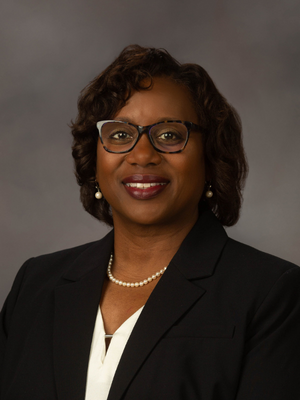
For this ‘Did You Know’ segment, I wanted to do something different and highlight a group not often recognized for their incredibly challenging work. This is about our teaching faculty. Our faculty operate within this complex, demanding, and constantly evolving professional environment. Faculty are expected to excel simultaneously as educators, clinicians, researchers, and mentors who are fully engaged in the missions of the school and institution. These overlapping responsibilities create significant challenges that directly influence faculty engagement, satisfaction, and longevity—and, by extension, the educational experiences of medical students, residents and fellows. Despite these challenges, our faculty continuously serve as the linchpin of the educational process, while also providing context for the curriculum, culture, and professional values transmitted to learners.
Faculty workload in academic medicine is often characterized by competing and, at times, conflicting demands. Clinical faculty must balance patient care obligations with teaching responsibilities, frequently in fast-paced environments that prioritize efficiency and productivity. Teaching, while essential, is often layered onto clinical schedules without proportional reductions in patient volume or administrative expectations. Similarly, research-focused faculty face pressure to secure funding, publish scholarship, and meet promotion benchmarks, even as they contribute to classroom teaching, advising, and curriculum development. Administrative tasks—including accreditation activities, committee service, and quality improvement initiatives—further compound time constraints and cognitive load.
These workload pressures can strain faculty capacity to engage deeply in teaching, particularly when educational contributions are undervalued relative to clinical revenue or research productivity. Teaching excellence requires time for preparation, learner assessment, feedback, and reflection. When faculty are stretched too thin, opportunities for meaningful interaction with students and other learners may be reduced, feedback may become superficial, and mentorship relationships may be difficult to sustain. Over time, excessive workload contributes to faculty burnout, which has implications not only for faculty well-being but also for educational quality and institutional viability.
Yet, despite these challenges, our faculty remain actively engaged in the medical educational programs. It is faculty who translate curricular objectives into lived learning experiences, adapting content to the needs of individual students, clinical contexts, and evolving healthcare realities. No technology, standardized module, or curricular blueprint can replace the faculty member’s judgment, presence, and responsiveness. Through daily interactions, faculty embody the values of the profession and the priorities of academic medicine. Faculty demonstrate how scientific rigor coexists with compassion, how clinical excellence can align with ethical responsibility, and how professional setbacks can become opportunities for growth. In this way, faculty do not merely teach medicine; they induct students into the profession itself. Faculty influence extends beyond explicit instruction to the formation of professional identity, shaping how our learners think, act, and relate to others as future physicians.
Importantly, faculty are uniquely positioned to assess and support learners’ developmental progress. By observing our learners longitudinally across learning environments, faculty can identify growth, struggle, and readiness for increased responsibility. This developmental guidance requires time, attentiveness, and continuity—qualities that are difficult to sustain when workload pressures are excessive. The school, institution, and state recognize faculty as the linchpin of medical education and has intentional investment with education as a core portion of the compensation plans for faculty. This acknowledges the scope of the faculty workload, aligning incentives with educational contributions, providing protected time for teaching and mentorship, and offering faculty development resources that enhance effectiveness and resilience.
Many thanks to all faculty for your choice to be here and your engagement. I know that faculty workload challenges represent one of the most pressing threats to the quality and sustainability of medical education. Yet even amid these pressures, faculty remain as the individuals who bring the curriculum to life, model professional values, and guide students through the profound developmental transformation from learner to physician. Strengthening medical education therefore requires not only curricular innovation, but also a steadfast commitment to supporting and valuing the faculty who serve as its foundation.