


In Memoriam: Rev. Ed King
The Medical Center extends its sympathy to the family of a former faculty member in appreciation for his contributions to the University of Mississippi Medical Center.
Rev. Ed King
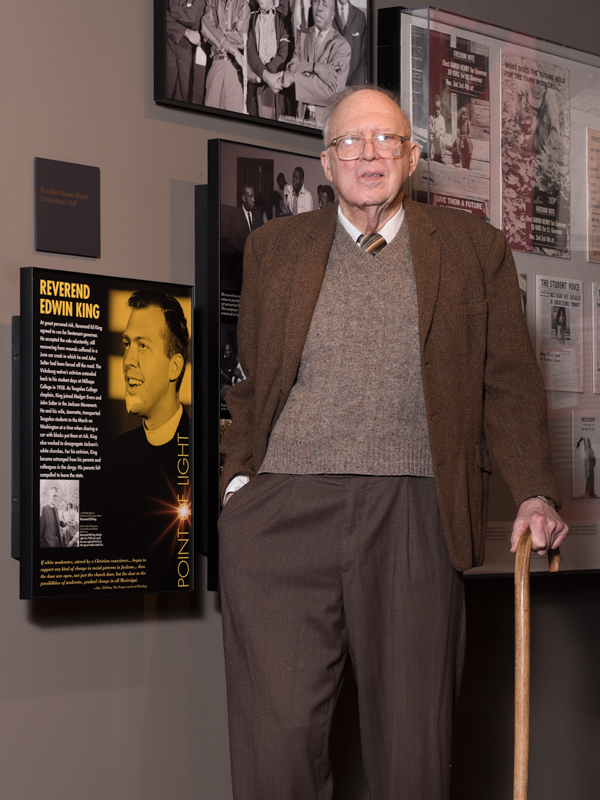
The Rev. Ed King, a white minister who was one of the last living founders of the Mississippi Freedom Democratic Party in the 1960s and, later, helped recruit minority students to the University of Mississippi Medical Center School of Health Related Professions, died July 4. He was 89.
A native of Warren County, King began his role in the civil rights movement in Mississippi by advocating for voting rights in the 1950s. In 1963, he met Mississippi NAACP leader Medgar Evers while taking part in meetings at Tougaloo College, where Evers encouraged his continued activism. The same year, he assisted Tougaloo students in a peaceful sit-in to integrate the Woolworth lunch counter in downtown Jackson and ran for lieutenant governor in the Freedom Vote, a mock election intended to encourage Black Mississippians to vote despite then-insurmountable hurdles to casting ballots. Dr. Aaron Henry, a Black pharmacist from Clarksdale, was the candidate for governor.
In 1964, King, Henry, Fannie Lou Hamer and others in the nascent Mississippi Freedom Democratic Party challenged the state’s then-all-white delegation to the Democratic National Convention. Though unsuccessful, the effort remade the Democratic Party by the end of the decade.
King completed a fellowship at Harvard Divinity School. He held master’s degrees in theology and in social ethics from Boston University and honorary doctorate degrees from Millsaps and Tougaloo. He was a retired minister of the Mississippi Conference, United Methodist Church.
In 1974, he was hired at SHRP, which had become a health science school just two years prior, in an effort to recruit minority students to health care careers in Mississippi. He held a faculty position in the school’s clinical health sciences area until 2019, giving lectures on topics such as the history of medical ethics and social factors of health care.
SHRP’s dean at the time, Dr. Thomas Freeland, was “deeply interested in minority participation in the expanding role of allied health professions in Mississippi,” King said in a 2018 interview with UMMC Communications and Marketing.
“His stature in Mississippi and his involvement in historical and cultural events are beyond measure,” said Dr. Ralph Didlake of the UMMC Center for Bioethics and Medical Humanities. “He was also a very generous friend – generous with his time, generous with his kindness, and with his willingness to share his many experiences, as activist, as a member of the clergy, and as a thoughtful engaged member of our community. Although our many conversations and interactions were informed by his past experiences, they were never really about the past but about a hoped-for future – one in which justice and respect for individuals prevailed.”
In 2014, King co-wrote “Ed King’s Mississippi: Behind the Scenes of Freedom Summer,” which featured numerous previously unpublished photos and accounts from the movement in Mississippi.
Services have not been announced.