The Right IDeA
Good morning.
Think about Mississippi red clay for a moment.
It’s rich in color and character, but anyone who has worked with it knows that it can be difficult to work with and potential alone isn’t enough. It takes the right ingredients and lots of care for that soil to become stronger, more stable and capable of sustaining something meaningful.
That’s what I think about when I consider the impact of National Institutes of Health-supported IDeA programs at UMMC.
For decades, Mississippians have faced a hard truth: shorter life expectancies and an outsized burden of chronic disease. Diabetes, heart disease, obesity, hypertension, cancer, maternal and infant health challenges – you name it, and we’ve been up against it.
And let me be clear: lack of talent or determination was never the issue.
What we needed was support for a stronger infrastructure. The research capacity. The kind of coordinated support that allows good ideas to take root, grow and ultimately improve lives.
Even so, we didn’t stand still. We kept doing what Mississippians do. We pressed forward, caring for our patients with the tools we had, even when the foundation for something bigger wasn’t fully in place.
Then came the NIH’s Institutional Development Award program – better known as IDeA.
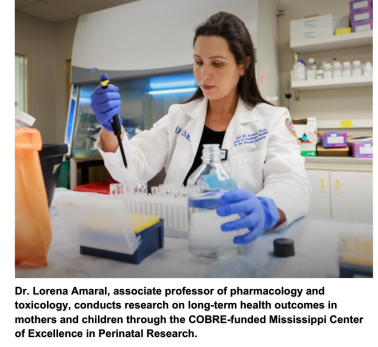 Through IDeA, UMMC has five active awards (four COBREs and one MCCTR) that have helped transform research in our state. Among them is the Mississippi Center for Clinical and Translational Research, or MCCTR, which is now entering its 10th year and seeking a five-year renewal. We also recently received a new NIH Centers of Biomedical Research Excellence, or COBRE, grant – another major investment in Mississippi’s research future. Another COBRE award called the Center for Psychiatric Neuroscience has completed all three phases.
These programs have been truly transformative.
In its earliest days, MCCTR focused on foundational work: building capacity, creating pilot funding opportunities, strengthening biostatistics support and connecting researchers across institutions. In other words, we were preparing the soil.
Early leadership from Dr. Jim Wilson, former director of clinical and population studies and professor of physiology and biophysics, helped shape the center’s mission around some of Mississippi’s most pressing health challenges, particularly obesity and diabetes. Under the continued leadership of current principal investigator and project leader Dr. Joey Granger, former associate vice chancellor for research and dean of the School of Graduate Studies in the Health Sciences, that vision has expanded into a statewide, collaborative research enterprise with impact reaching far beyond our campus.
Those efforts have allowed UMMC not only to compete nationally, but to lead in ways that matter right here at home. The programs have helped us recruit and support talented investigators, drive innovation and build a culture where research and patient care go hand in hand.
And because of the measurable success we’ve seen, we are optimistic about MCCTR’s renewal and the continued momentum these programs bring to Mississippi.
Perhaps most importantly, the research is no longer confined to labs and journals. It’s showing up in people’s lives. Patients in rural communities are participating in studies without driving hours to Jackson, thanks to remote monitoring tools and expanded access to care. Partnerships with other universities, public health agencies and community clinics help us tackle challenges that are too complex for any one institution to solve.
Today, our biomedical research has given the state a stronger foundation to solve the health challenges that disproportionately affect rural and underserved communities. That’s the power of IDeA. And as more research takes root at UMMC, we can build A Healthier Mississippi.